




Acoustic engineering's role in Smart Cities: Solutions for urban noise control
Acoustic engineering is playing an increasingly vital role in the design of Smart Cities, providing effective strategies to control urban noise. In an environment where population density and traffic are on the rise, implementing soundproofing solutions is crucial for improving quality of life and urban sustainability. This article explores how these technical solutions—such as acoustic barriers and insulating panels—contribute to modern city planning, examining the regulatory framework and the significant impacts of noise on public health.
The Impact of Noise on Health and the Urban Environment
According to the European Environment Agency (EEA), noise pollution is the second-largest environmental problem in Europe, surpassed only by air pollution. In Spain, its impact is a growing concern:
- The EEA reports that prolonged noise exposure in Spain leads to over 1,100 premature deaths a year and approximately 4,100 hospitalizations for cardiovascular diseases, chronic stress, and respiratory issues.
- A report from Barcelona’s Institute for Global Health (ISGlobal) estimates that traffic noise alone causes around 300 heart attacks and 30 premature deaths annually, making it a major public health issue.
- At a cognitive level, studies from the World Health Organization (WHO) and the Environmental Epidemiology Research Center (CREAL) have confirmed that children exposed to high noise levels in school can experience a delay of up to 8 months in reading acquisition and a decrease in academic performance.
- Furthermore, constant urban noise degrades sleep quality, contributes to anxiety disorders, and directly affects workplace productivity. A 2022 study also showed that continuous exposure to high noise levels significantly increases the risk of heart attacks in young people, even those under 40.
In this context, acoustic engineering and solutions like acoustic barriers, sound-absorbing pavements, and urban acoustic planning have become essential for protecting citizens’ health and building sustainable urban environments.
Regulations and Acoustic Planning in Spain
Spain has a robust regulatory framework to combat noise pollution, aligned with the European Directive 2002/49/EC on environmental noise management. The core legislation is Law 37/2003 on Noise, which is complemented by two key Royal Decrees:
- Royal Decree 1513/2005: Establishes the methodology for creating Strategic Noise Maps (MER) in major cities, as well as along main roads, railway lines, and near airports.
- Royal Decree 1367/2007: Defines acoustic zoning criteria, quality objectives, and noise intrusion limits for different urban areas.
These regulations require regional and local authorities to develop:
- Strategic Noise Maps (MER): Identify the areas most affected by noise pollution, particularly along heavily trafficked routes like urban highways and ring roads.
- Noise Action Plans (PAR): Outline specific measures to mitigate noise, which can include installing acoustic barriers, using sound-absorbing pavements, or reorganizing traffic.
Major Spanish cities like Madrid, Barcelona, and Valencia have already implemented their MERs and PARs. Smaller municipalities are beginning to follow suit, often with the support of NextGenerationEU European funds specifically allocated for sustainable urban development and Smart City projects. This regulatory commitment, coupled with technological advances, provides a clear roadmap toward healthier and more sustainable urban environments.
Acoustic Engineering Solutions for Smart Cities
Acoustic engineering provides two main types of solutions: urban design and specialized noise reduction systems.
Urban Acoustic Design
Urban planning can integrate elements like plant barriers, insulating facade panels, or silent pavements to mitigate noise. However, when these measures are insufficient to combat the noise from heavy road or rail traffic, industrial activity, or nightlife, more advanced solutions are needed.
Specialized Noise Reduction Solutions
- Acoustic Barriers: An Effective Shield Against Noise
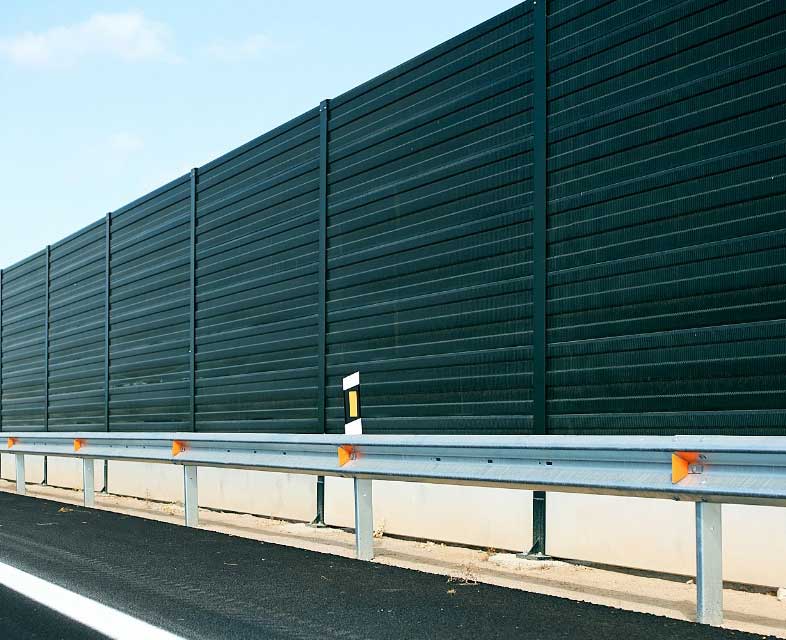
Acoustic barriers are one of the most established solutions in acoustic engineering. They typically feature reflective galvanized steel surfaces, polypropylene side closures, and a lightweight modular structure. They are designed for easy assembly and guarantee acoustic impermeability, complying with European standards (EN 1793-1 and EN 1793-2) and carrying the CE mark (EN 14388), which certifies their effectiveness in acoustic absorption, insulation, and noise reduction.
Beyond their durability and resistance to wind or rail-induced vibrations, these barriers offer a key aesthetic advantage: seamless landscape integration through customizable paint colors. This turns them into not only a technical solution but also an urban asset. In Madrid and Valencia, installing acoustic barriers in school zones near busy roads has been shown to improve students’ concentration and academic performance by reducing distraction and hearing fatigue. Other models are also available, including aluminum, concrete, wood, or even plant-based formats, for scenarios with specific integration requirements. - Wall Claddings: A Silent but Essential Solution
While acoustic barriers act as a visible shield, acoustic wall and facade claddings play a silent but crucial role in urban architecture. These materials, installed on buildings near high-noise areas, significantly reduce sound transmission into homes, offices, and schools. Their effectiveness comes from using multi-layered panels, technical foams, and sound-absorbing materials that provide both thermal and acoustic insulation. Modern claddings are also highly customizable, respecting a building’s architectural style while meeting stringent acoustic quality standards.
These systems are particularly useful for urban revitalization projects and for retrofitting older buildings that lack proper insulation. Investing in acoustic cladding improves residents' quality of life, increases a building's real estate value, and contributes to urban regeneration.
Intelligent Urban Monitoring and the Urban Sound Economy
Some cities, like Barcelona, are implementing acoustic cameras with artificial intelligence that can identify excessively loud vehicles and display visible alerts on LED panels. These systems also use sensors and predictive algorithms to anticipate periods of high noise pollution.
The concept of the urban sound economy suggests that sound is more than a nuisance—it’s a strategic element that can be designed to improve well-being, strengthen a city's brand, and attract sensory tourism. In this sense, acoustic engineering generates significant urban value.
Benefits for Quality of Life and Public Planning
The implementation of acoustic engineering solutions offers tangible benefits for public health, urban planning, and the economy:
- Improved Night's Rest: The Carlos III Health Institute estimates that over 25% of the Spanish population is regularly exposed to noise levels above 55 dB at night, a threshold the WHO considers harmful to sleep. Acoustic solutions significantly reduce these levels, promoting restful sleep and helping to decrease cases of chronic insomnia.
- Reduced Cardiovascular Risk: According to EEA data, acoustic control interventions can lead to a 20% reduction in the incidence of hypertension and a 12% decrease in serious cardiac events associated with prolonged noise exposure.
- Cognitive Protection for Children: Pilot projects in cities like Madrid and Valencia, where acoustic barriers were installed near high-traffic roads, have shown improved academic performance and reduced auditory distractions, directly benefiting children’s learning and cognitive development.
- Enhanced Public Spaces: Reducing noise in squares, parks, and residential streets encourages greater use of urban spaces, strengthens community life, and improves the overall sense of safety and environmental quality.
- Lower Economic Burden: The World Bank and EEA estimate that the economic cost of urban noise in Spain exceeds €5 billion annually due to healthcare costs, sick leave, and lost productivity. Investments in urban acoustic engineering thus have a clear economic return.
- Strategic Value for Smart Cities: An urban environment with good acoustic quality becomes a major asset for attracting investment, tourism, and improving livability. As a key indicator of sustainability and quality of life, noise management aligns directly with Sustainable Development Goals (SDG 3 and 11).
Acoustic engineering has cemented its role as a fundamental pillar in the evolution of intelligent cities. It not only offers technical solutions to the challenge of urban noise but also represents a strategic investment in public health, social welfare, and urban competitiveness. By integrating soundproofing solutions, acoustic design, and intelligent monitoring within the existing regulatory framework, cities can reduce noise pollution, improve public health, and transform their urban spaces into more livable, sustainable environments for citizens, governments, and businesses alike.


Noise pollution: How It affects health and how we can mitigate its effects may
Noise pollution has become an increasingly significant problem in modern society. It can originate from a variety of sources, such as traffic, industry, and construction work. Unfortunately, this noise pollution has been correlated with a range of harmful health effects, from physical discomfort to more severe psychological problems. However, although we are all exposed to noise in one way or another, there are measures we can take to reduce its effects on our well-being and protect our health.

How does noise pollution affect human health?
The World Health Organization has shown that noise exceeding 75 dB is considered excessive and painful from 120 decibels and has negative effects on human health, both physically and mentally. According to WHO, high exposure to noise can cause a series of physical ailments, such as hearing loss, high blood pressure, sleep disorders, and even cardiovascular problems. Additionally, psychological effects can include stress, depression, irritability, aggression, and lack of concentration. All of this points to the need for greater awareness of this problem since millions of people suffer from its potential dangers.
Noise pollution is mainly caused by industrial activities such as construction work or transportation vehicles like planes and cars. In public spaces such as parks or streets, too much noise impacts the environment we live in, creating discomfort that negatively affects people’s well-being.
Sources of noise pollution
Environmental noise is a significant problem that has become increasingly common in recent years. Besides being an unpleasant nuisance, it can have serious consequences for the auditory canals of both humans and animals. There are many sources of noise, including transportation systems, industrial machinery, and even people and animals.
The main sources of noise are constructions, transportation systems such as trains, buses, boats, cars, and planes. Motor vehicles not only generate audible sounds but also vibrate, which amplifies their sound-producing capabilities. Moreover, the high concentration of traffic in urban areas raises noise levels even more significantly than in rural areas. Industrial equipment is another source of noise pollution, as it often produces powerful sound waves at high frequencies that can persist over long distances.

Solutions to reduce noise pollution
Noise pollution has become a major problem in many metropolitan areas across Spain. It is estimated that thousands of people are exposed to noise levels that exceed safe thresholds, and with increasing urbanization, this number is likely to rise even further. Fortunately, there are some simple steps that can be taken to reduce noise and make our cities more pleasant places to live.
One way to reduce noise from cars and other vehicles is to implement speed limits on roads and highways. Doing so would not only help reduce the amount of noise present in city areas but also improve overall safety conditions for citizens. Additionally, investing in quieter transportation options, such as electric or hybrid cars, can also help significantly reduce noise levels in cities over time.
Furthermore, the installation of barriers such as noise walls around noisy construction sites can greatly reduce their impact on surrounding neighborhoods.
Benefits of reducing noise
Reducing noise can bring a range of benefits to both individuals and society as a whole.
Firstly, reducing noise pollution can improve the health of those regularly exposed to high levels of noise. Studies have found that exposure to loud noises can lead to increased stress levels, difficulty sleeping, decreased productivity, and an increased risk of cardiovascular diseases. By reducing the amount of noise pollution present in our daily lives, we can help protect people from these negative impacts associated with excessive sound levels.
Additionally, reducing noise pollution can also benefit businesses by improving the academic and work performance of employees.
Governmental and community solutions
The Spanish government, through the Ministry of Transport and Sustainable Mobility, is working to adopt noise mitigation measures in its infrastructures. To this end, multiple public tenders have been launched in recent years to deploy these solutions. It is expected that this policy will remain stable in the coming years due to the need to implement European directives on noise pollution.
For some years now, any new infrastructure construction project incorporates an environmental impact study, possible solutions, and budget allocations to mitigate the noise generated by its operation.
However, the main focus of investments is on updating the acoustic impact of currently operating roads and railways, mainly acoustic screens. There are also projects for installing noise barriers around airports or other noise-generating facilities.
At the regional level, efforts are also being made to invest in updating the acoustic impact of the road and railway networks operated by the autonomous communities. Multiple initiatives are being prioritized by conducting acoustic impact studies that identify the most necessary actions.
If we, as a country, aspire to have infrastructure that operates at an adequate noise level and provide a health and quality of life service to citizens, public investment is required, and there must be a market that incentivizes private companies to invest in innovation to make projects more competitive and sustainable.

Green facades against noise in large cities
Green facades against noise in large cities are an effective and sustainable alternative to the current lifestyle. Historically, nature has been introduced into urban environments through parks and green areas in delimited spaces. Over time this trend has been evolving, and more and more, the proposal aims at integrating nature and environmental awareness in our daily lives to develop a society that is as sustainable as possible.
What are green cities?
These cities are those that respect the environment to a greater extent and facilitate the coexistence of people with nature in their daily lives. Green cities seek to take advantage of natural resources, thus favoring friendly urban environments in such important aspects as green spaces, air quality, coexistence with animals or temperature regulation.
Large cities find it very difficult to adapt to this objective, which is why their authorities often seek disruptive solutions that attract sustainability without destroying everything that has already been built. One of the most effective solutions are vertical gardens. Flowers, aromatic plants and even urban gardens planted on walls that help clean the air and bring numerous benefits to people. Plants absorb CO2 from the air while producing oxygen, they have pleasant smells, they also regulate temperature and act as a layer against noise.
In cities like Singapore, always at the forefront of sustainability, or much closer, Vitoria-Gasteiz, named European Green Capital in 2012, we can find examples of this concept.

Our commitment to sustainability
At Metalesa we are committed to the environment and sustainability by providing innovative solutions, such as our screens against noise pollution. These screens are barriers specially designed to deal with the problem of noise pollution for both people and animals.
Today in particular, we focus on a solution for noise pollution that is also sustainable and provides great support for introducing vegetation into urban spaces.
Our Metagreen acoustic screens integrate nature into urban spaces in the style of vertical gardens. This product is in tune with the concepts of green cities and smart cities, since it provides the technology of acoustic screens against noise plus the benefits for the health of people and the environment with its natural cover of living vegetation.
Metagreen acoustic screens
The Metagreen sound-absorbing panel is made up of a hot-dip galvanized steel frame that fits between the fastening profiles of the support structure. Its interior is made up of rock wool and other materials that, together with the green plastic mesh, facilitate the growth of vegetation on both sides. In addition, they are sustainable, since the rock wool inside them is capable of retaining rainwater, which becomes a moisture reserve for the vegetation that grows outside.
Advantages of the Metagreen acoustic screen
Being a plant panel, it integrates magnificently with the landscape and blends in with the new model of green cities with vertical gardens. Among its most notable advantages it is important to highlight the natural properties of vertical gardens, such as the release of oxygen, as well as the absorption of CO2, temperature regulation and livening up of urban spaces, visually approaching natural spaces.
It also has numerous advantages such as its durability thanks to the galvanized anti-corrosion treatment, its excellent insulating and absorbing properties against noise pollution.
METAGREEN panel
Plant-like sound-absorbing panels
Where to install plant-based anti-noise screens?
One of the most common spaces where these screens are added is on roads, since their maintenance is minimal and simple. It is also very common to see them in urban, public and private areas, such as chalets or urbanizations due to their attractive plant aesthetics and their fantastic anti-noise properties. They perform a dual aesthetic and acoustic function.
How are Metagreen acoustic screens installed?
These screens are very easy to install, but it is convenient that any project is studied by our team of engineers to guarantee the expected acoustic result and the robustness of the solution.
Green cities are a great alternative to urban spaces far from nature. If you want more information about our Metagreen screens, or want to know our complete range of acoustic screens, contact us. We will be happy to help you.
Solutions to isolate traffic noise on roads and cities
Roads unite people. Every day it is estimated that millions of vehicles circulate on the roads.
At Metalesa, our goal is to ensure the safety of people. For this reason, we take care of guaranteeing safety while driving with our containment systems such as bridge parapets, terminals or crush cushions. However, on the roads there is another danger that is not seen, but heard. And not for vehicle occupants, but for the people who live around road infrastructures: noise pollution.
Noise pollution is a problem that we face every day both on roads and in urban environments. Its effects are harmful to people and the environment, therefore, society is increasingly becoming aware of it and taking action through specific action plans governed by the authorities.
Acoustic studies on roads
Precisely, one of these measures is the performance of acoustic studies. The pollution of a specific area can be measured with noise maps. If an excess of noise is concluded as a result of such study, the next step is to configure the optimum solution to attenuate it, normally with an acoustic screen.
Undoubtedly, acoustic screens are the best corrective measure to reduce the propagation of noise generated by road or rail traffic, since they act as a barrier between the receiver and the noise source, both absorbing and reflecting the noise waves. Thus, acoustic screens are the most widely used anti-noise systems in transport infrastructures, due to their rapid installation, their value for money and their effectiveness.
Our acoustic screens
At Metalesa, through the installation of our acoustic screens, we ensure the quality of life of people who struggle day to day traffic noise.
Our acoustic screens are conformed of sound-absorbing panels that provide quality acoustic and mechanical solutions. No only they minimize noise pollution from traffic on roads and railways, but also from many other sources such as industrial facilities (factories,...), commercial malls (air conditioning equipment), or massive events in public/private facilities (sport stadiums, leisure clubs, hotels…). All of our acoustic screens comply with European standards EN14388, EN16272 and EN16727.
Learn more about the Regulation of noise reduction devices for roads.
How to decide among different type of acoustic screens?
There are multiple drivers to analyse when choosing the right acoustic screen for a certain project.
- On the one hand, the requirements defined by the acoustic study should guide the project.
- It is essential to take into account the environmental and climatological agents to which the panels will be exposed. Mainly the wind loads that dictate the mechanical loads that the panel must support. Our experts in calculation of structures have extensive experience in designing the optimal solution for each case. But also other aspects such as the type of environment, which derives in different levels of corrosivity, and before which, the appropriate finishes must be applied. Or even climate or exposure to snow which may recommend different materials.
- Finally, aesthetics is another part of the decision. Goals such as integration with a forest or a green landscape, or even keeping nice views of an attractive panorama, are issues to take into account and that can make one solution more convenient than another.
All these aspects must be taken into account together so that the technicians in charge of carrying out the project select the panel that best suits the needs of each acoustic screen work. We have several panel configurations for each scenario, all of them accredited by tests carried out in accredited laboratories: metallic steel or aluminum, methacrylate, wood or vegetable mesh. Having said that, the most commonly installed screens for road and railway infrastructures are steel ones. We have numerous models that solve any casuistry. You can see all our acoustic screens at this link.
But in this article, we focus on less common, but equally interesting speaker configurations:
Metawood noise barrier with wooden panels

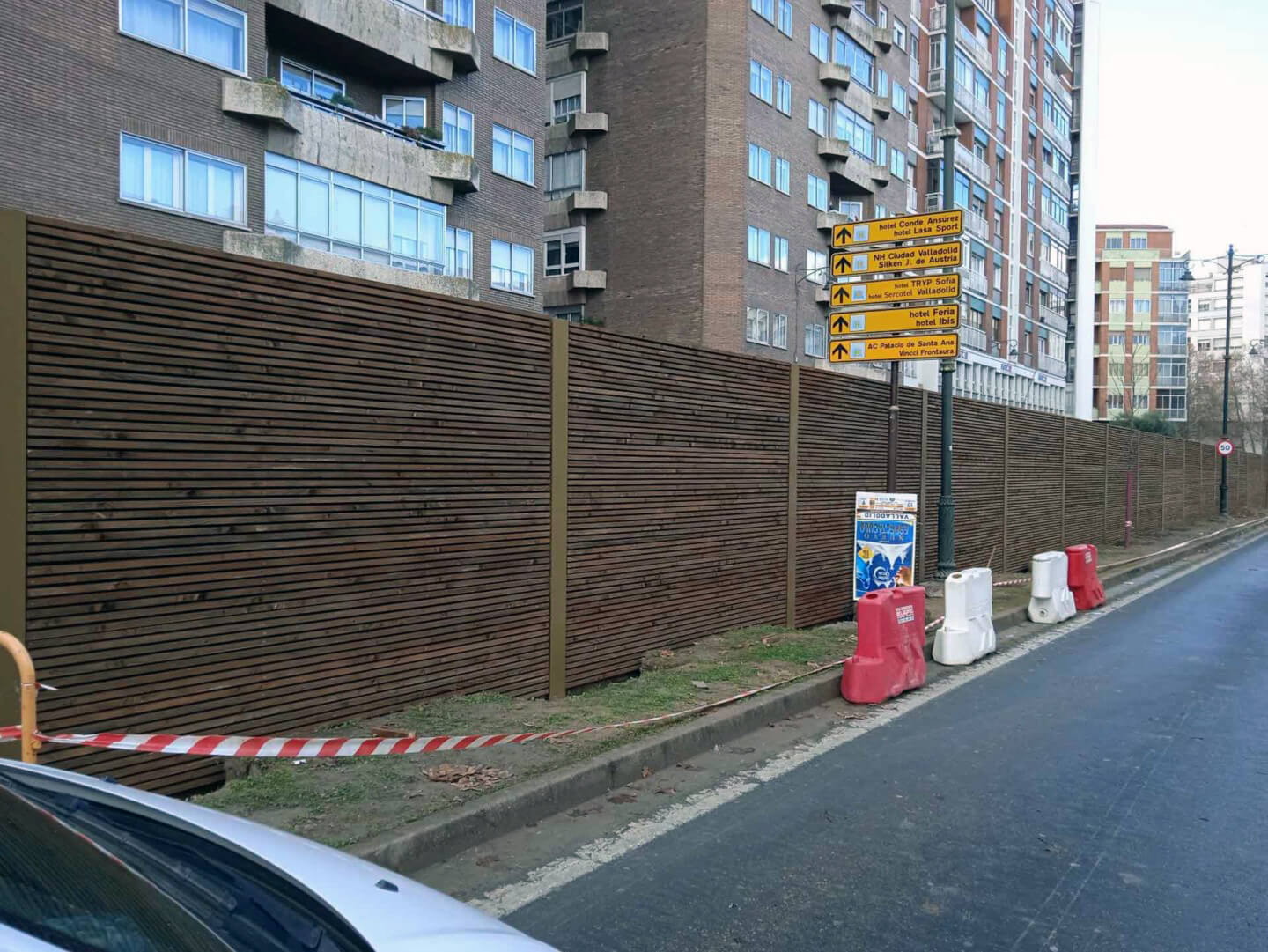
This sound-absorbing panel is made up of wood modules of varying dimensions, which fit between the HEA/HEB fastening profiles of the support structure.
The wooden acoustic panel consists of the following elements:
- Traffic side: In this part, pine wood boards are arranged with the possibility of making different combinations with boards horizontally, vertically and obliquely, achieving various aesthetic effects.
- Sound insulation: It is a semi-rigid rock wool panel with a black veil that protects it from erosion and humidity.
- Rear side: They are planed pine wood boards arranged horizontally.
- Thanks to the Metawood panel, maximum noise insulation and absorption is obtained. In addition, thanks to their natural materials they allow an excellent landscape integration.
Metagreen noise barrier with vegetal panels
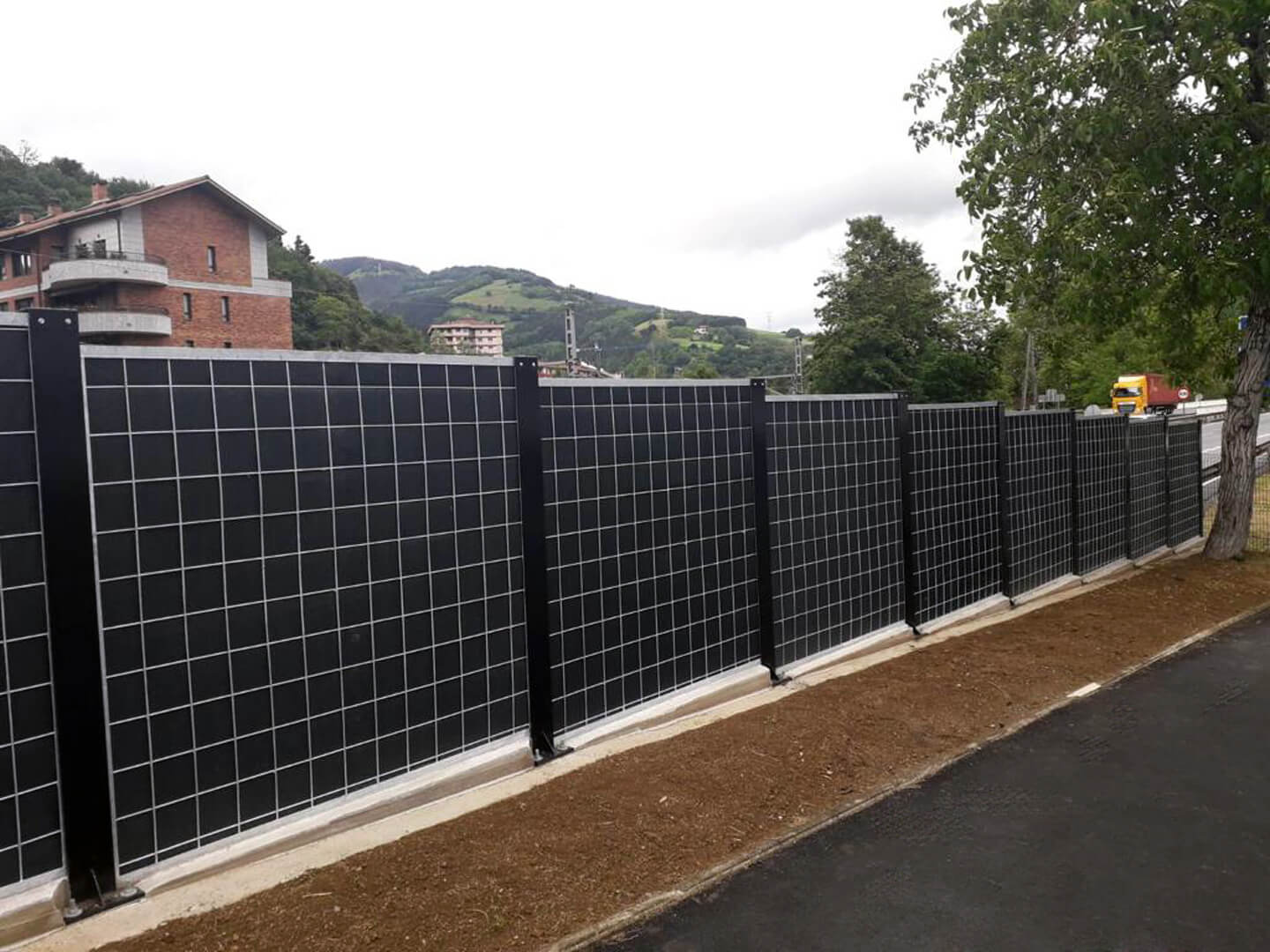
Rock wool and other materials are placed inside the vegetable acoustic panels, along with a green plastic mesh that facilitates the growth of vegetation. Rock wool is capable of retaining rainwater inside, becoming a highly valuable moisture reserve both for animals and to facilitate the growth of vegetation. Metagreen panels are made of recyclable and sustainable materials.
The Metagreen acoustic screen guarantees an excellent acoustic and absorbent effect, in addition, it has a long durability when undergoing a galvanized anti-corrosion treatment.
Mixed steel and methacrylate noise barrier
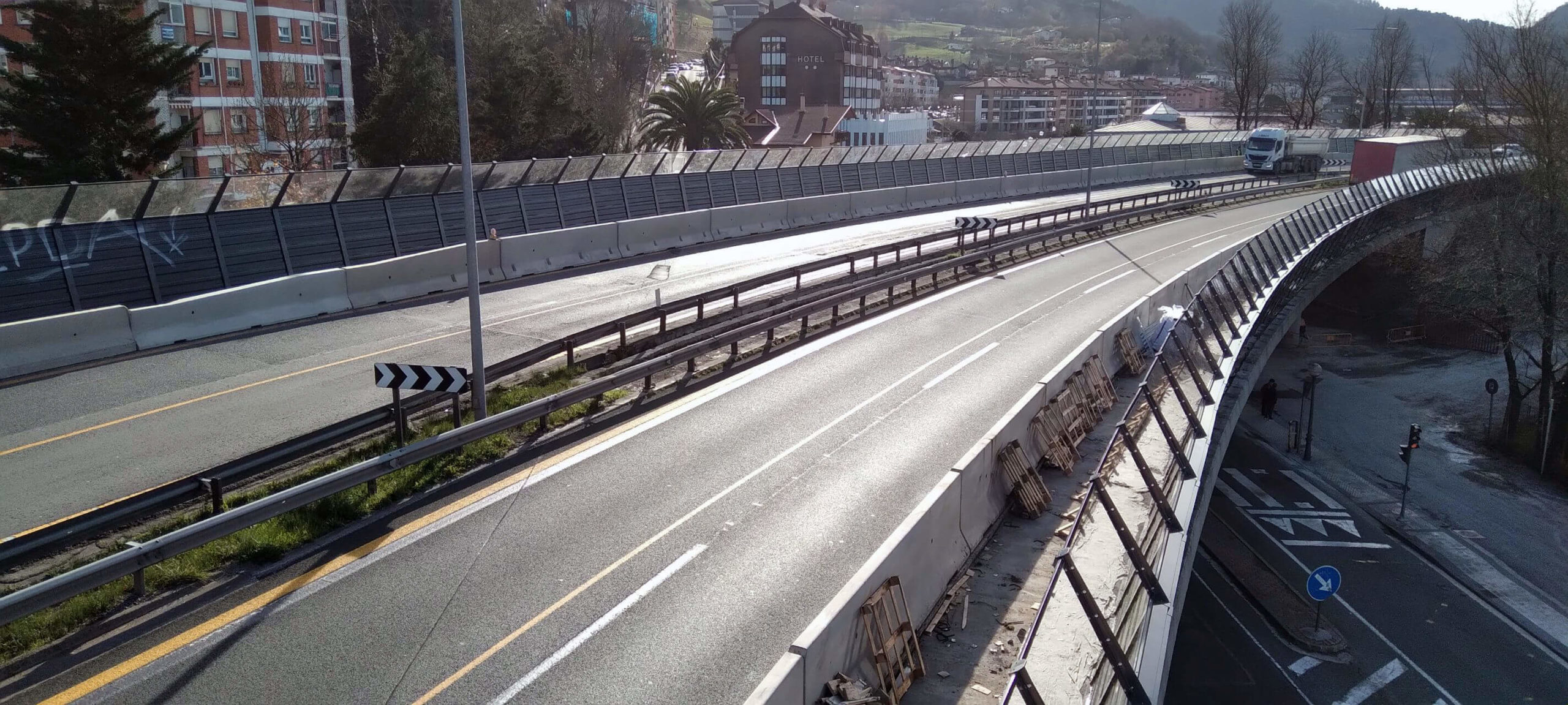
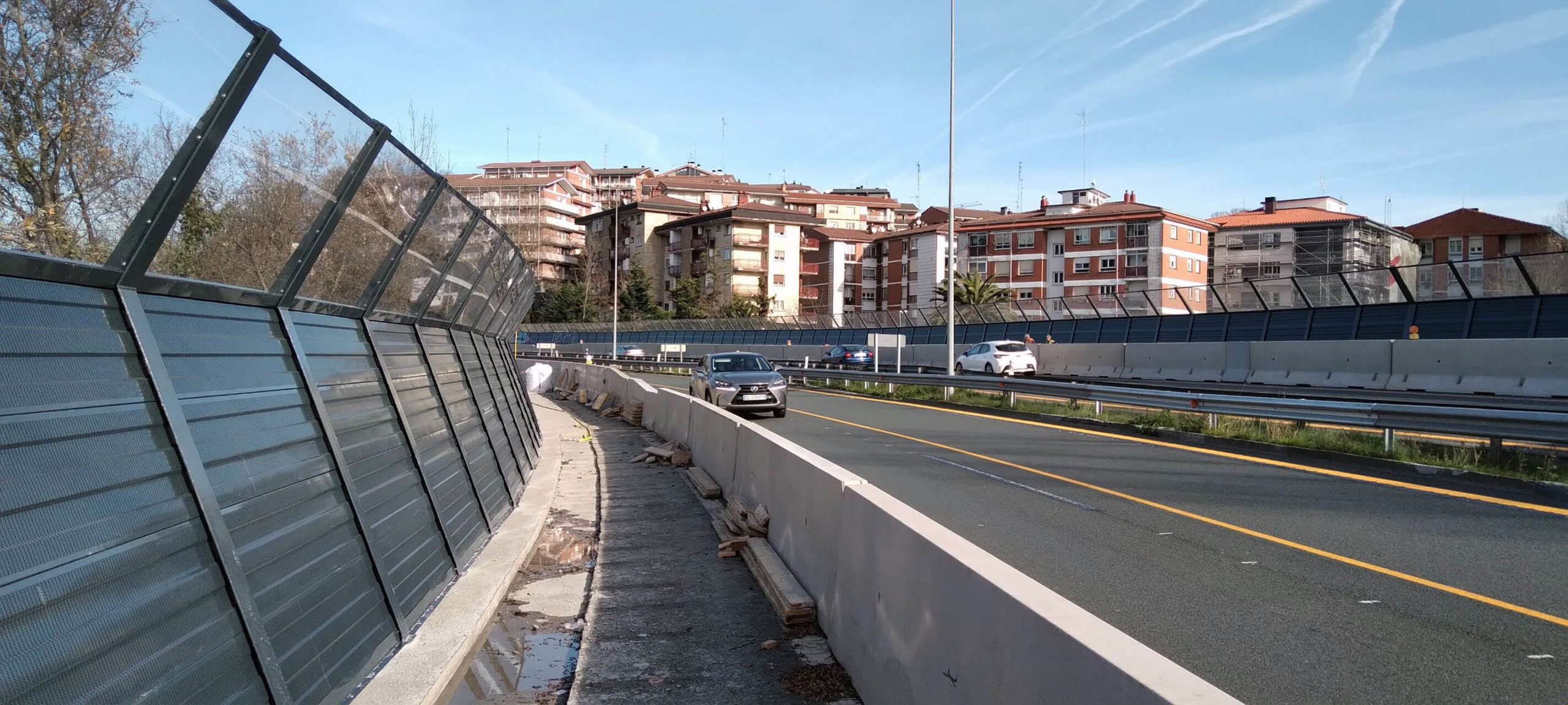
The mixed steel and methacrylate acoustic screen, like the previous two, also has exceptional sound-absorbing qualities. We put at your disposal all kinds of varied designs.
In addition, its aesthetics provide excellent landscape integration.
We show you the mixed acoustic screen of steel and methacrylate that we installed in the work of the N-1 in Lasarte (Guipúzcoa).
If you need more information about our acoustic screens, or want to know our complete range, contact us. We will be happy to help you.
International Noise Awareness Day
Today is International Noise Awareness Day, a day to contribute in making our society understand the importance of reducing noise for our health and the environment.
Noise is usually defined as «Inarticulate sound, generally unpleasant». Today we live with noise everywhere due to the noise pollution produced, among others, by vehicles. The noise pollution to which we are exposed in our day to day life can cause serious consequences such as hearing loss, sleep disorders or cardiovascular diseases. Cities are taking more and more measures against these annoying sound, however, there is much work ahead, and other facilities such as airports, sports stadiums or auditoriums also need solutions to isolate noise
To reduce noise in urban spaces, we have a wide range of products that will combine with each space according to its style. Acoustic screens are an efficient and aesthetic solution that can be used in any of the cases.
Metagreen acoustic screens
These screens are our most sustainable acoustic screens and not only they perform their job against noise, but they also contribute to sustainability thanks to their built-in vegetation and the use of recyclable materials in their manufacture. Vertical Garden Concept.
These are screens made up of an interior of rock wool as the main material to absorb external noise and an exterior of micro-perforated plastic mesh thanks to which vertical vegetation will grow.
These screens offer an ecological and natural appearance, perfect to be installed in urbanizations and private areas where they will give the appearance of a vertical garden. Its galvanized treatment offers a long durability of these screens that insulate and absorb noise magnificently.
Methacrylate acoustic screens
Acoustic methacrylate acoustic screens are ideal for not losing light and ensure a visual sensation of spaciousness. It is an insulating panel that consists of a polymethacrylate sheet in a structure made up of synthetic rubber gaskets.
The methacrylate panel configuration achieves maximum insulation. It integrates with the landscape thanks to its transparency and/or colors. These screens can be combined in the personalized model with other materials, achieving a product that completely adapts to the aesthetics of your city.
Metawood acoustic screens
Wood also offers a touch of nature like Metagreen screens, but they can also be combined between wood vertically and horizontally to achieve different aesthetic effects.
Metawood screens have rock wool to isolate sound as well as a black protective veil that protects the panels from erosion and moisture.
Wood acoustic screens provide excellent insulation and maximum absorption. Its wooden aesthetic integrates perfectly with the landscape and the treatments they require are respectful of the environment.
Concrete acoustic screens
It is made up of a double layer of reinforced concrete structure and sound-absorbing porous concrete. These concrete acoustic panels can be the color of the concrete or painted smooth or with decoration.
It has good acoustic absorption. Isolates sound excellently. It is a very durable structure with low environmental impact, recyclable and without waste.
Customized acoustic screens
We can also create personalized noise barriers by combining different panel models, being able to design acoustic screens completely to the client's taste and adapted to the needs of each space.
It must be taken into account that the product that really performs the absorbent function is the rock wool housed inside, so the exterior can be designed to fit aesthetically with the space without affecting its properties.
These solutions that we describe for urban areas are applicable to isolate traffic noise on highways, where the installation of steel or aluminum acoustic screens is more common.
Steel or aluminum acoustic screens
Both the steel and aluminum acoustic screens are made up of a noise-absorbing layer, an inner layer of rock wool that isolates this noise, and the reflective layer so that the remaining noise does not pass through, but bounces back. Finally, to guarantee this acoustic performance, these panels are closed with polypropylene side covers.
They are a fantastic option for their insulation and absorption capabilities. In addition, they integrate with the environment thanks to their various designs and available combinations. Being a modular structure they are light and easy to install. They are also resistant to wind loads and rail traffic overpressure, a performance accredited in laboratory tests.
Acoustic screens can be temporary or fixed and the installation varies according to type. Among all the solutions that we offer in Metalesa, a previous acoustic study will always be assessed to guarantee the best solution against noise that adapts to the needs of the space. You can compare our screens in the product comparator or contact us, we will be happy to help you.

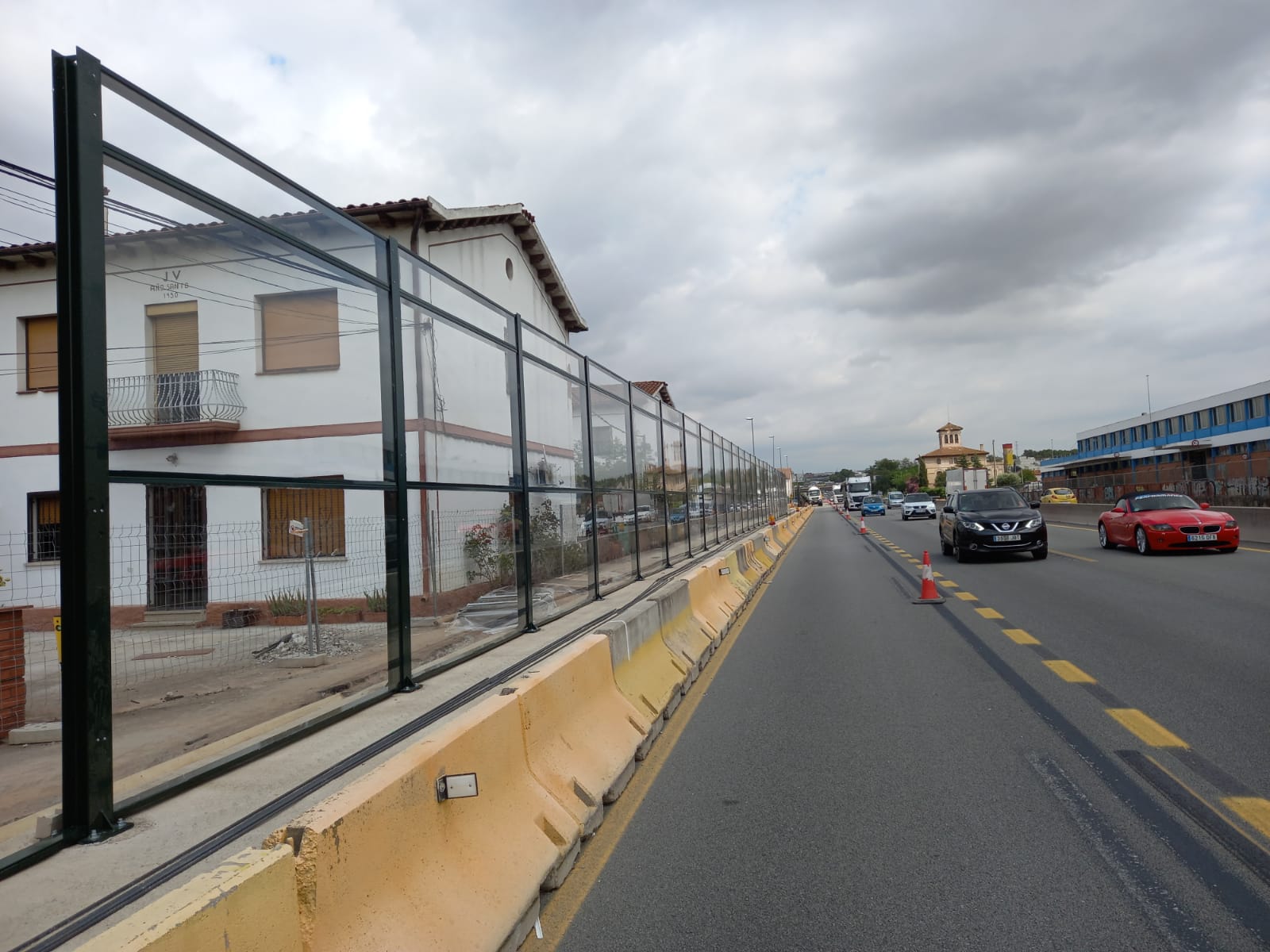
How to protect my house from the noise of cars while maintaining the views
Are you staying in a house in a small town on the coast or in the mountains? Do you enjoy views of the sea or nature? If the answer is yes, we can imagine the sensations that have come to mind: calm, disconnection, well-being, happiness ... However, sometimes there are external factors that interrupt this atmosphere of tranquility, such as noise from cars traveling in nearby areas.
It is a shame that the noise pollution caused by traffic interrupts your state of serenity, because excess noise is not only annoying, but is also harmful to health, especially in the face of constant exposure to high noise levels.
At Metalesa we ensure the protection of people, and therefore in this article we bring you the solution to end the noise of cars without giving up wonderful views.
Soundscape and noise pollution
The term 'noise pollution' is likely to be much more familiar to you than 'soundscape', so let's start by explaining the latter.
What is the soundscape?
The Soundscape refers to the set of characteristic sounds of a certain place. That said, there are several types of soundscapes:
- Natural soundscapes: are those that are produced due to the sound of animals, vegetation moving with the wind, sea waves, raindrops ...

- Artificial soundscapes: are those produced by human activities, the use of machinery, traffic ...

In general, natural soundscapes are positive, since they generate a type of noise that is neither annoying nor harmful to humans. However, man-made soundscapes are often the cause of noise pollution, and what is even more serious, noise pollution can eventually take over natural soundscapes.
Given this fact, from Metalesa we recommend installing acoustic screens to eliminate excess noise, and thus restore the natural state of the area in which your home is located.
Acoustic screens to absorb noise
Acoustic screens are made up of panels capable of absorbing or attenuating excess noise. At Metalesa, one of our star products is precisely acoustic screens, which is why we have a wide variety of types and models of acoustic panels.
With the installation of acoustic screens you will be able to live peacefully at home without the annoying noise due to traffic interrupting your tranquility. That said, if what we want is to maintain the views, not all acoustic screens will work for us. Our recommendation is the methacrylate acoustic screen thanks to its transparent panel.
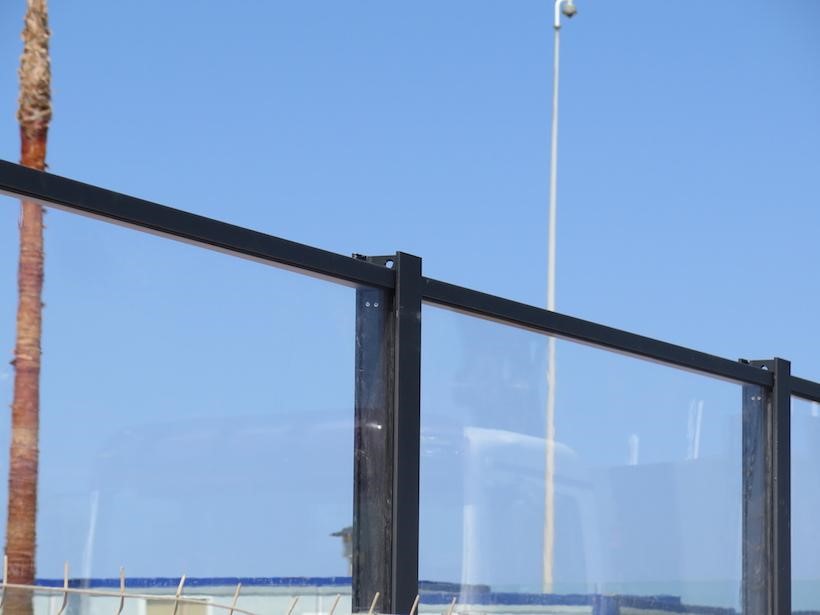
Methacrylate acoustic screen to maintain views
The methacrylate acoustic screens are made of polymethacrylate sheets, and can be colored or colorless, although as a general rule if we want to enjoy the views we will opt for the colorless ones; they can also incorporate different vinyl models. In any case, we always adapt to the needs of each client.
Its height and separation dimensions are calculated based on an acoustic study, the terrain and the action of the wind in the area. Likewise, the acoustic panels can be adapted to different widths of beam profiles.
More advantages of methacrylate acoustic screens
The methacrylate acoustic panels fulfill a double acoustic and aesthetic function, as they guarantee noise absorption while integrating perfectly into the landscape, allowing tenants to enjoy the views around them.
- The methacrylate acoustic screen is easy to install.
- There is the possibility of choosing between various designs of acoustic panels, which give rise to different combinations resulting in mixed shielding.
- Methacrylate acoustic screens are highly resistant to adverse weather conditions, such as the action of wind or rain.
- If the customer needs colored acoustic panels, it is possible thanks to the galvanized and thermo-lacquered components of the acoustic panels, in different standard colors from the RAL chart.
- All our acoustic screens, including the methacrylate acoustic screen, have been mechanically tested according to the EN 1794-1 standard.
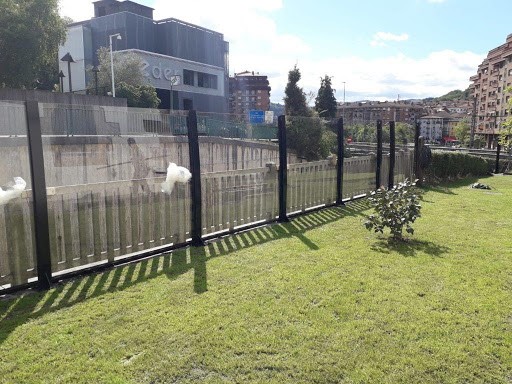
The methacrylate acoustic screens are the perfect solution to guarantee your well-being in your home, while you have the pleasure of enjoying the landscape that surrounds you. Be it the beach, nature, beautiful views in urban areas ... We all deserve to live in a soundscape in which we can feel comfortable. If you want to end the noise in your house, do not hesitate to contact us by calling 96 088 99 44 or sending an email to metalsa@metalesa.com
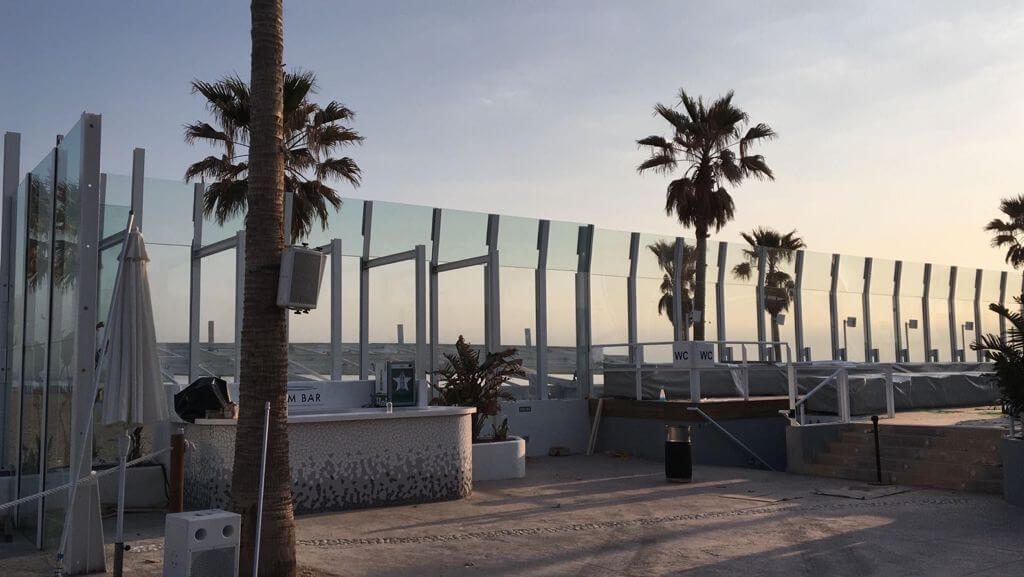
How to avoid noise in leisure premises
In this sense, entertainment venues such as restaurants, bars, nightclubs, game rooms ... are also a source of noise to take into account if we want to guarantee the quality of life of people who live in areas close to this type of premises. .
In the entertainment venues several factors are mixed, on the one hand, music is usually very loud, and on the other hand, the bustle of people outside. All this together leads to an acoustic problem in cities to which Metalesa aspires to provide a solution.
Acoustic regulations for leisure venues
Leisure venues are obliged not to exceed certain noise limits. In accordance with Law 7/2002, which refers to protection against noise pollution, and many other regional or local legislation, these are the maximum acoustic levels allowed in this type of premises:
- Nightclubs: 104 dB (A)
- Venues with musical ambience: 90 dB (A)
- Game rooms: 85 dB (A)
- Bars and restaurants: 80 dB (A)
However, it is important to add that, although an entertainment venue may be complying with acoustic regulations, noise can still be annoying for people living in its surroundings, specially at night.
For this reason, it is so important to provide these businesses with the accurante infrastructures to eliminate noise pollution, preferably through acoustic screens specially designed for leisure venues.
First step: carrying out an acoustic study in leisure venues
The first step is usuarlly to carry out an acoustic study in the area affected by excessive noise.
Experts in acoustic studies use both measurement equipment and a very clear methodology. They are responsible for evaluating it there is an actual excesso of noise over the limits established by law. The acoustic study duration may bary from a few hours to several days, depending on various factors, for example, if it is a closed or an open room, or if it is a high or low space.
A noise map is obtained as a result of the acoustic study. If the indicators show that the actual noise surpasses the legal limits, METALESA can handle the solution with its accoustic screes. Later one, the experts will return to confirm that the original acoustic problem has disappeared.
In fact, it is important to bear in mind that conducting an acoustic study is mandatory for all those premises that produce noise with a sound pressure level greater than 70dBA. The specifications of each premises are included in the municipal ordinances.
Types of acoustic screens for entertainment venues
Urban acoustic screen for leisure venues
Urban acoustic screens for entertainment venues are ideal for outdoor terraces. In addition to being effective, they also fulfill an aesthetic function.
At Metalesa we design, manufacture and install urban acoustic screens for leisure venues of three types: metal, methacrylate and wood. All types of acoustic panels will be equally efficient, but aesthetically one type of acoustic screen may be more convenient than another.
For example, transparent methacrylate acoustic screens are perfect to attenuate noise while customers do not lose attractive views. On the contrary, if it is a space where privacy is important, it might be a better idea to chose metal or wooden acoustic screens. In addition, this type of acoustic screens can give entertainment venues their own style and personality.
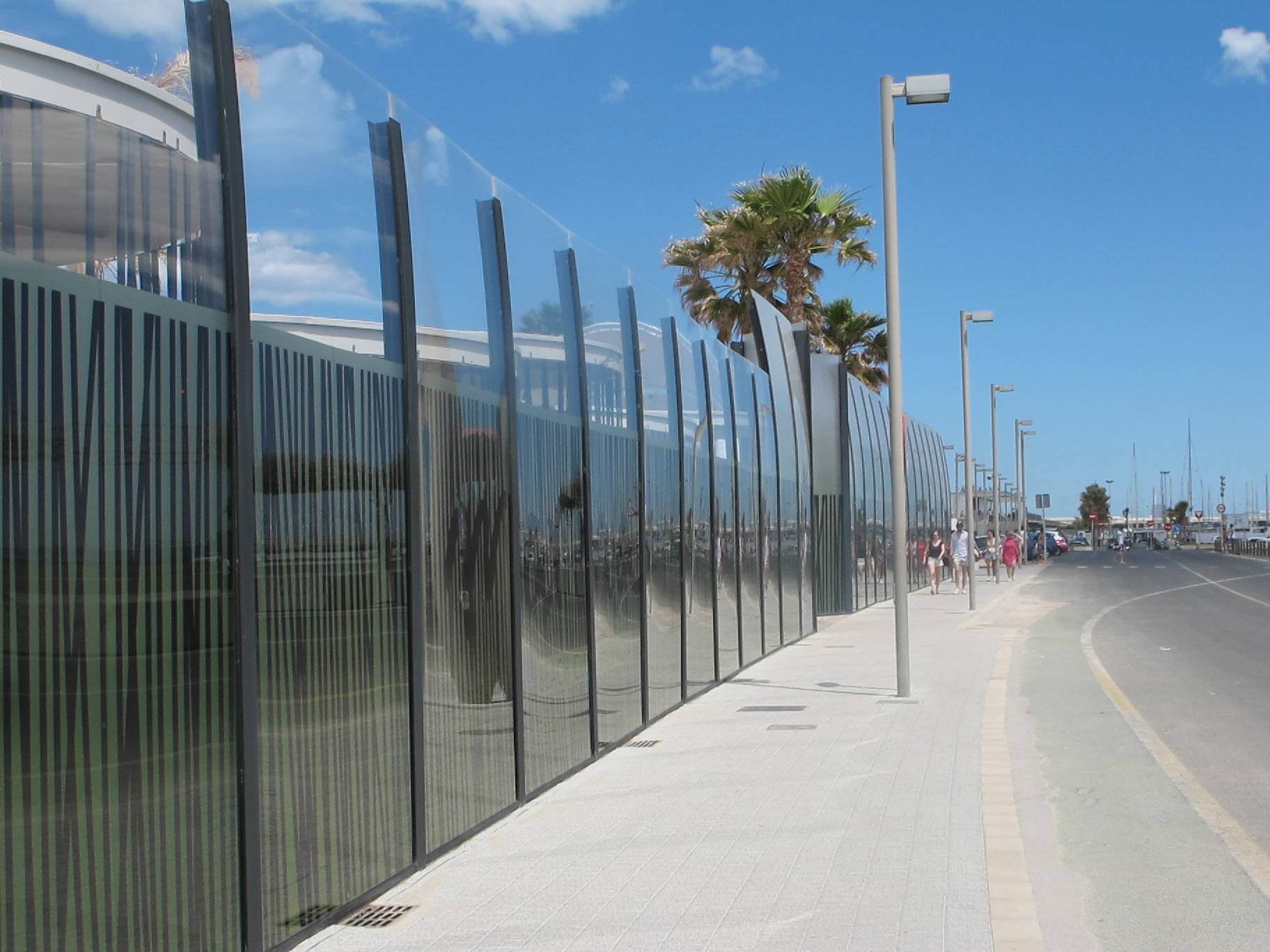
Acoustic screen with vegetal mesh for leisure venues
The Metagreen acoustic screen is also an acoustic barrier that provides a great solution to the aesthetic appearance. A leisure space that surrounds its area with this type of screen will create a vertical garden that will act as a decorative element of the walls of the premise.
The growth of vegetation in this type of acoustic panels is achieved by adding over the rock wool a green plastic mesh that facilitates the growth and rooting of vegetation on both sides.
Design Acoustic Screen
For us, each client is unique and that is why we attend to their needs in a totally personalized way. The quality of our products consists of offering the client a product that is 100% adapted to their projects.
Successful entertainment venues tend to have a well-defined and studied design and decoration, and the installation of an acoustic screen should not be a disruptive element in this harmony. Our Design Acoustic Screens allow the owners of the entertainment venues to never lose their style, and at the same time comply with the acoustic regulations.
As we have previously mentioned, at Metalesa we take care of offering a quality product that not only meets high expectations in relation to acoustic problems, but also at the level of design and adaptation to the space of our clients.
The truth is that it cannot be denied that the installation of acoustic screens for leisure venues is always a good idea to guarantee the rest of the neighbors and avoid more than one complaint on their part, improving the image of your premises.
If you are the owner of a leisure establishment, do not hesitate to contact us. It is not worth risking a possible fine, or generating discontent in your neighborhood. Bet on the safety, health and aesthetics that our acoustic screens guarantee. To request a quote, call us at 96 088 99 44 or send us an email to metalesa@metalesa.com
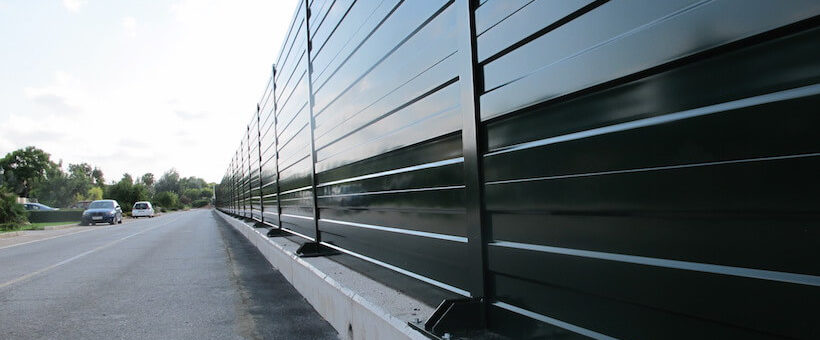
The loudest roads and railway areas of the Valencian Community
It is no secret that both roads and railways are sources of excessive noise, causing annoyance both to the population and to the conservation of the environment. Specifically in the Valencian Community, it is estimated that approximately 183,000 inhabitants are daily exposed to noise that comes from the main infrastructures, which is a quite alarming fact considering the negative consequences of noise pollution.
The CV-35, one of the roads with the highest levels of noise pollution
The acoustic studies carried out in the main roads of the Valencian Community have concluded that the CV-35 is one of the most affected road, since around 10,000 people support up to 75 decibels at peak times of the day.
Another section with a high noise concentration is the one between Vilamarxant and Benisanó on the CV-50. In this area there are several schools and institutes that must withstand noises of up to 70 decibels.
On the other hand, although the railway network generates less acoustic nuisance, we must also focus on the acoustic problems that derive from the noise of the trains.
According to a European Environment Agency (EEA) report in 2010, railway noise affected over 12 million inhabitants of the European Union every day, figures that may well have increased since that time.
Rail noise in Europe is especially concentrated in Western European countries, among which is Spain. The main sources of noise pollution in railways are engine, rolling and aerodynamic noise, while the most annoying ones are produced by freight trains. We must not forget that passenger stations, places for receiving goods (dry ports), train maintenance activities and other facilities also generate noise in their daily operation. Given this, it may seem that noise pollution caused by the railway and its facilities is almost impossible to eliminate, but the truth is that it is easier to mitigate.

Consequences of noise pollution for our health
As we have seen, there are high figures that confirm that many people are victims of the problems derived by noise pollution from roads and railway areas in the Valencian Community. What are the harmful consequences of excess noise for health?
- Hearing problems: it is the most common and one of the most worrisome. Keep in mind that any sound above 85 decibels can damage hearing, and on roads and railways, this limit is often far exceeded. Someone who lives in this type of area is continuously exposed to a very high noise level, and consequently can develop hearing loss.
- Cardiovascular problems: Constant exposure to high noise levels can increase blood pressure, increase heart rate and increase stress by releasing the hormone cortisol ... All of this can lead to an imbalance of vital body functions.
- Sleep problems: If the home is near highway areas, the noise from freight trucks is very likely to cause sleep disturbances. As we mentioned in the previous point, cardiovascular problems are a long-term effect of this exposure to excess noise. In the short term, the most notable are fatigue, impaired memory and creative abilities, and difficulty concentrating.
- Digestive problems: Although to a lesser extent, there are studies that have shown that excess noise leads to a decrease in peristalsis, that is, muscle contractions thanks to which the food eaten moves through the digestive system. As a consequence, problems such as gastritis, ulcers, heartburn, loss of appetite, diarrhea or constipation may be more frequent.

How can we solve this problem?
The expansion of urban centers towards industrial areas has meant that many living areas are located very close to road and railway infrastructures, and this requires effective solutions that eliminate excess of noise.
Acoustic Screens
As experts in acoustic solutions, from Metalesa we can certify that acoustic screens are an effective solution to reduce or eliminate this noise. But first, from Metalesa we get in charge of conducting acoustic studies, which are used to extract noise maps that measure noise pollution in a specific area, and based on the results, we take care of adopting the necessary measures through the installation of acoustic screens.
Types of acoustic screens for roads and railway areas
Steel or aluminium metal acoustic screen
These types of acoustic screens are made up of galvanized steel or aluminum panels, which are vertically superimposed between HEA / HEB profiles until the desired height is achieved. By installing metal acoustic screens on roads or railway areas close to human environments, we obtain maximum insulation and absorption, which is a very effective solution to counteract the negative effects of noise.
In addition, other advantages of the metallic acoustic screen are its ease of installation, its long durability thanks to the quality of its components, and its resistance to loads such as the action of the wind or the overpressures produced by rail traffic.
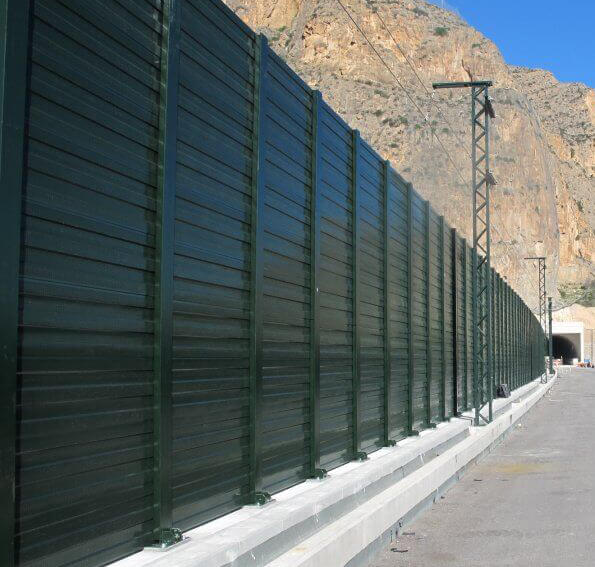
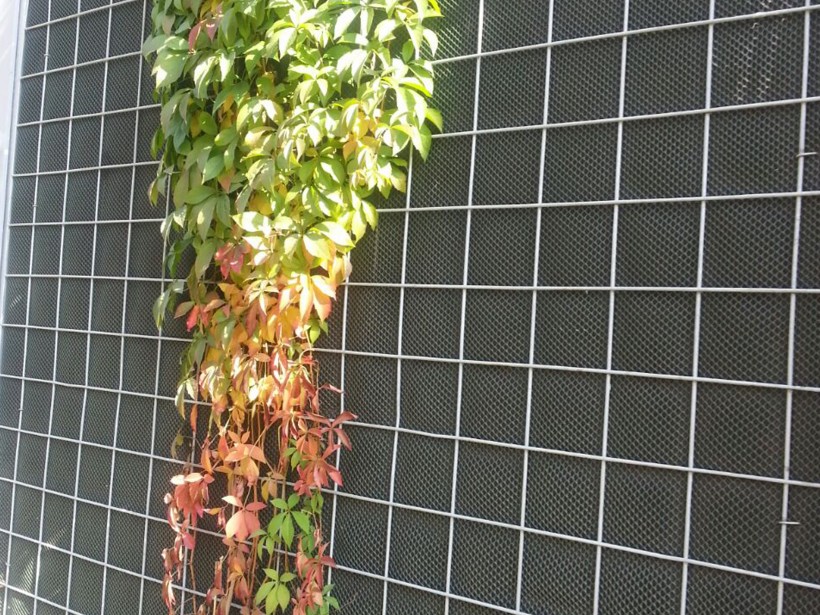
Metallic acoustic screen with mesh or vegetable
This type of plant acoustic noise screens also achieve great noise absorption and acoustic insulation in road and railway areas. Inside the panels that form it, rock wool is placed together with a green plastic mesh that facilitates the growth of vegetation.
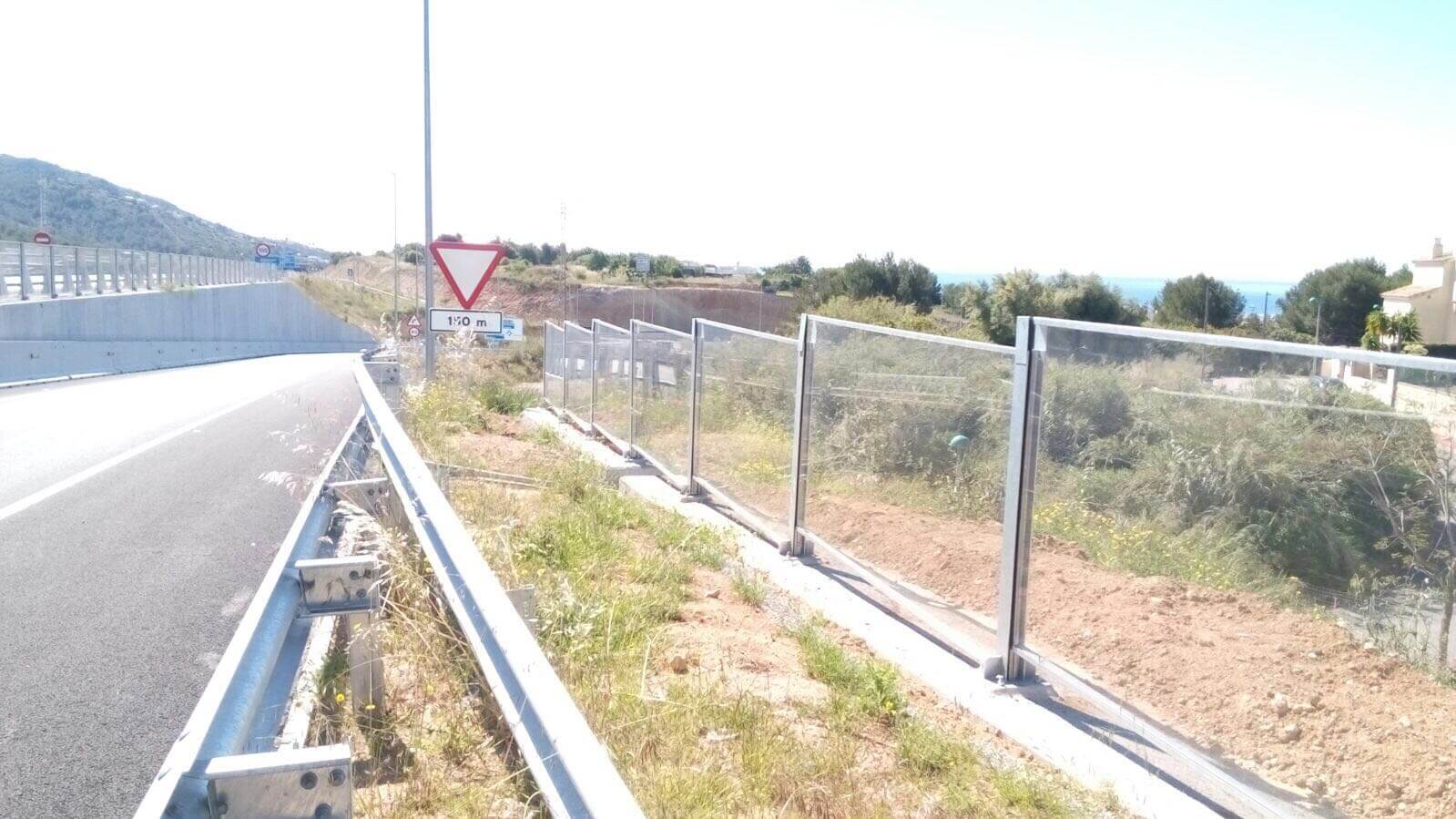
Methacrylate acoustic screen
Las características acústicas de las pantallas acústicas de metacrilato o vidrio también son muy eficientes. Están formadas por paneles de metacrilato cuyas propiedades de aislamiento han sido evaluadas de acuerdo a la norma EN 1793-2:1998, obteniendo un elevado índice de aislamiento.
The acoustic characteristics of methacrylate or glass acoustic screens are also very efficient. They are made of methacrylate panels whose insulation properties have been evaluated according to the EN 1793-2: 1998 standard, obtaining a high insulation index.
In addition, it is an easy-to-install acoustic screen, which allows landscape integration, and has a long durability thanks to the quality of its components. For all this, they are ideal to be installed in noisy areas.
Methacrylate can be transparent or have a certain color. Likewise, it is possible to install vinyl solutions on the methacrylate to prevent damage to the birds in the environment.
Wooden Acoustic Screen
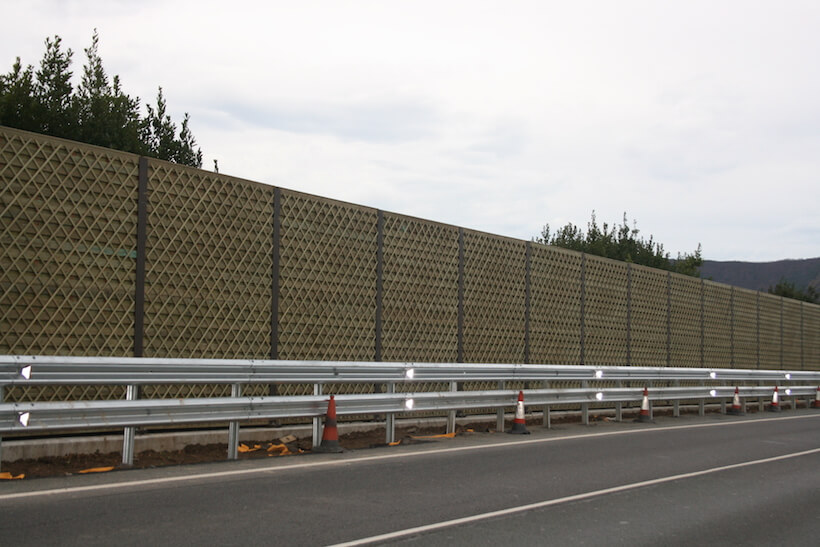
This wooden anti-noise screen performs a double acoustic and aesthetic function and is made up of the following elements:
- Absorbent and reflective face: treated Scots pine wood slats.
- Acoustic insulation: rock wool with black protective veil.
- Supporting structure: made up of HEA / HEB-type uprights with hot-dip galvanized welded base plate and painted with polyester powder paint.
Concrete acoustic screen
Concrete acoustic screens are also a very effective option for noise abatement in railway areas.
Among its main characteristics we find its great stability, and its resistance over time, which is why its maintenance is scarce. This consistency is achieved thanks to its materials: cement, sand, water and gravel or crushed stone, giving rise to a highly rigid structure.
The concrete is supported by metal pillars, which also receive a specific treatment to withstand the passage of time. The anchoring of the steel profiles is carried out on the concrete through bolts of variable diameter and length, depending on the client's needs.
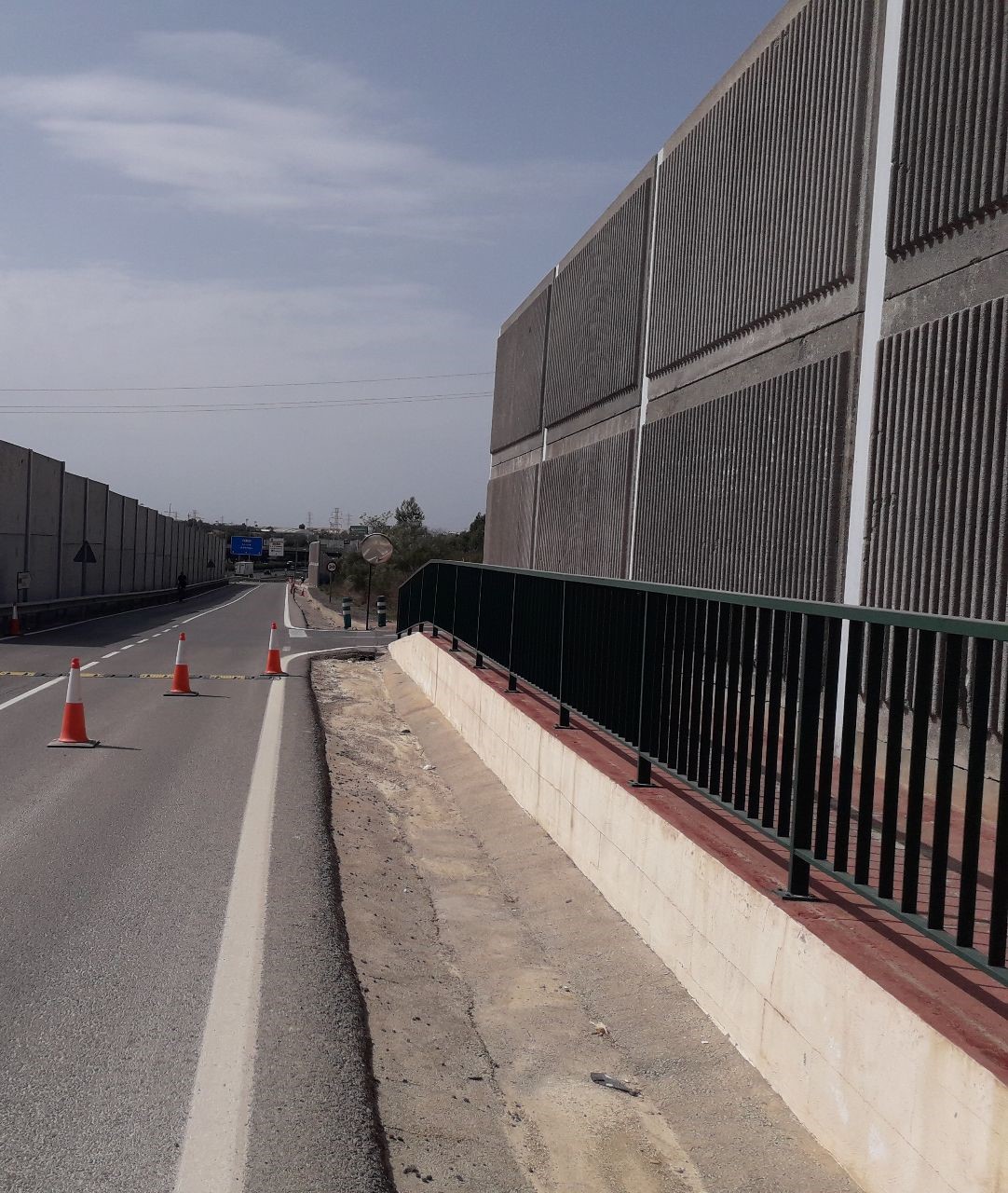
Like the rest of acoustic screens, it also allows maximum noise absorption and excellent landscape integration.Noise pollution is a very serious problem, but ‘invisible’ and fortunately more and more society is giving it the importance it requires to implement effective solutions. Undoubtedly, the installation of acoustic screens to absorb noise on roads and railways is the best option to prevent harmful consequences on the health of people who live near these areas. At Metalesa, we want to be part of the solution with our acoustic screens. If you need our services, contact us by calling +34 96 088 99 44 or send us an email to metalesa@metalesa.com.
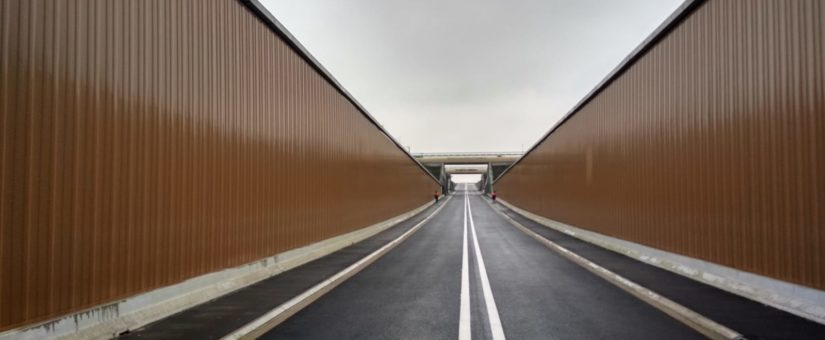
The importance of wall covering in facades and tunnels
Wall cladding in facades and tunnels is one of our most demanded services both nationally and internationally, and at the same time one of the most unknown. For this reason, in this article we want to tell you about the great advantages that wall coverings have and what is the difference between cladding on the façade and in tunnels.
Wall cladding in tunnels
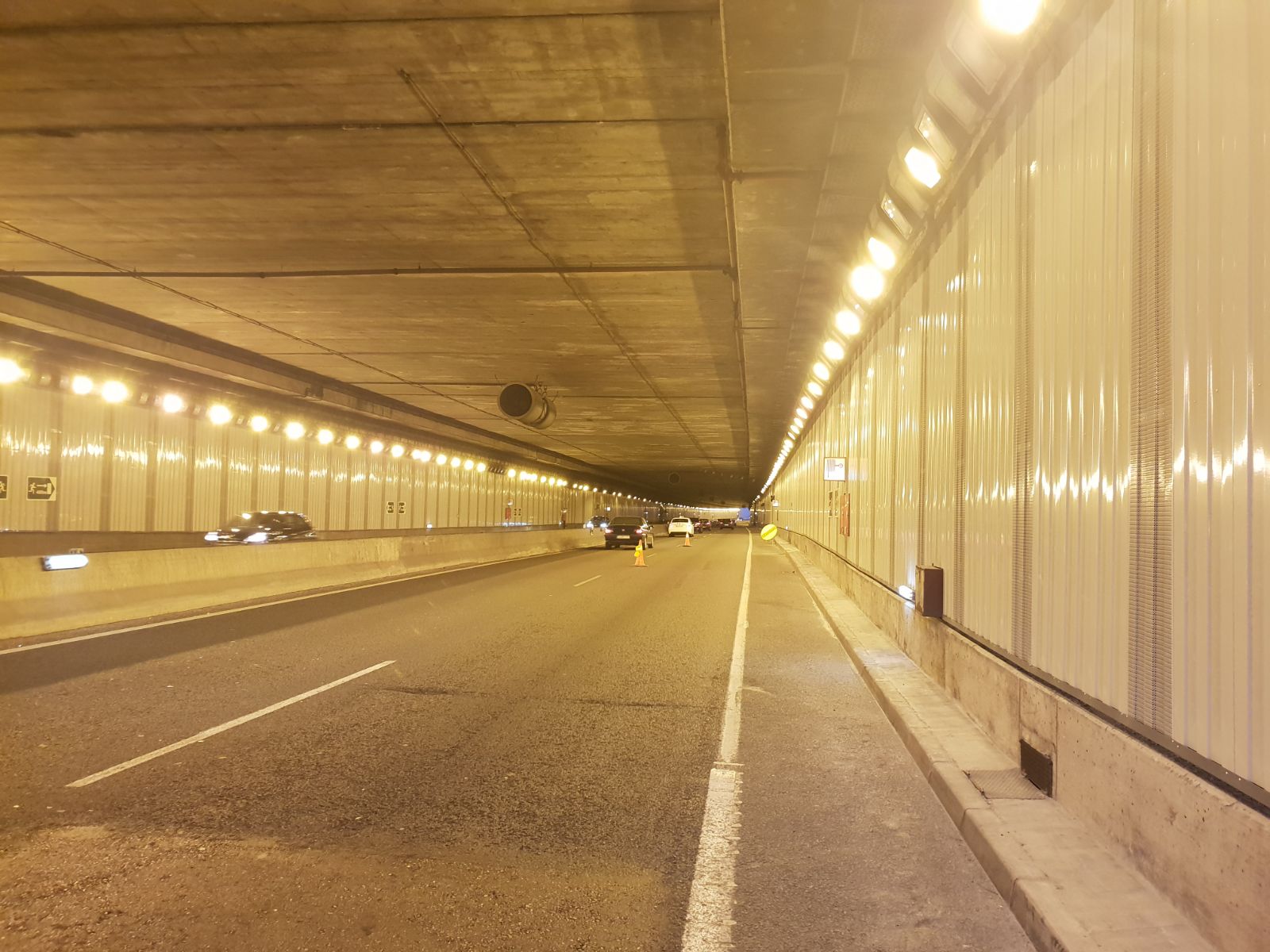
In this case, it is a wall cladding made of galvanized steel sound-absorbing panels, specially designed to deal with noise pollution derived from road and rail traffic, both inside and at tunnel entrances. At the customer's choice, galvanized steel panels can be filled with rock wool, a material with a high sound absorbing capacity that facilitates the rebound of acoustic waves inside, thus trapping much of the sound.
Sometimes, poor tunnel lighting poses a greater risk to drivers. In this sense, the installation of our wall cladding on the concrete walls of the tunnel brings luminosity to the interior, facilitating vision and increasing safety. In addition, any additional signaling or lighting system can be installed on our cladding.
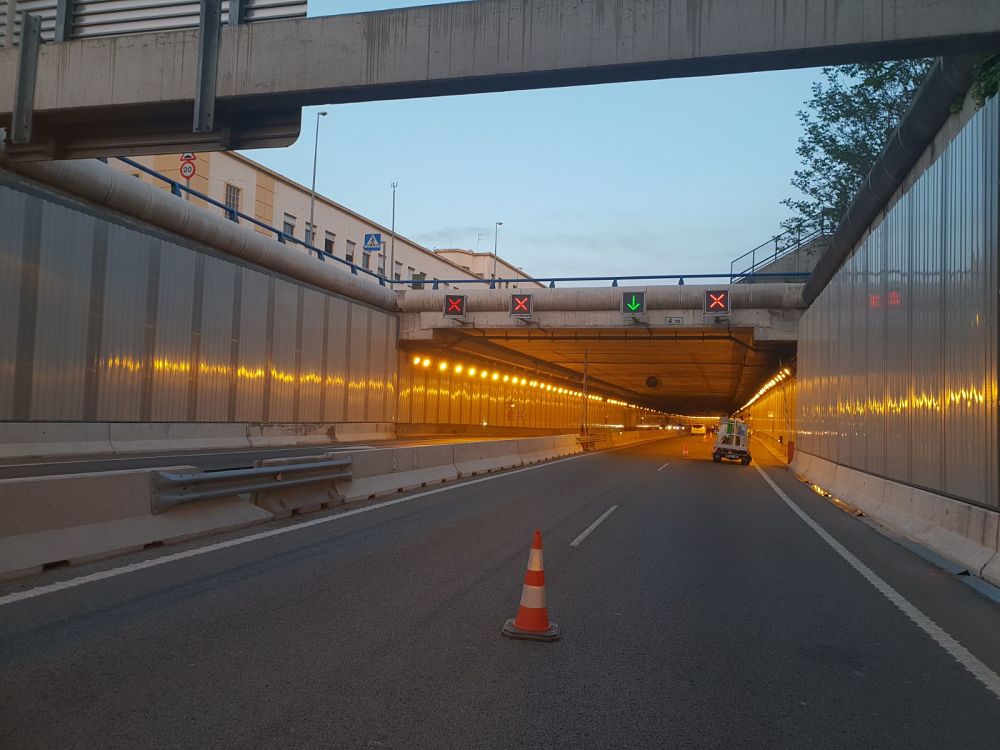
Characteristics and elements of the panels for sound absorbing tunnel coating.
We have several standard construction solutions, configured thanks to the experience of having carried out numerous projects that has helped us to optimize the design and its features.
Our team of engineers studies each project and of steel with the client's specifications, defines the best technical solution. Typically, the cladding has the following elements:
- Panels: made of corrugated and galvanized steel sheet. They can be perforated in case of acoustic absorption requirements. There may be a single front panel or front and rear panels. At the customer's request, its finish can be thermo-lacquered in different colors from the RAL chart.
- Paneles: realizados con chapa de acero grecado y galvanizado. Pueden ir perforados en caso de haber requerimientos de absorción acústica. Puede haber un solo panel delantero o paneles delantero y trasero. A petición del cliente, su acabado puede ser termolacado en diferentes colores de la carta RAL.
- Rock wool: This material is used to absorb sound waves generated by transport systems.
- Supporting structure: It is a wall anchoring system using adjustable rods made up of profiles that allow the panels to be adapted to walls with almost any type of irregularity. We have several bearing systems, in each project the most suitable will be chosen depending on elements such as the state of the wall or the type of coating required.
Advantages of panels for sound absorbing tunnel lining
- Corrosion resistance: we have different solutions depending on the environmental specifications in the area, including up to C5. In addition to being made with galvanized materials, if the client wishes, we can apply primer and / or thermo-lacquering techniques, which protect the coating from the consequences of the passage of time and adverse weather conditions.
- As we have already mentioned, this type of cladding fulfills an important acoustic function, and this is precisely its main advantage.
- Easy installation due to its lightness. High productivity in assembly.
- Its maintenance and repair is also easy in case of damage by accident.
- It is a non-flammable coating.
- It fulfills an aesthetic function as the customization of the color is possible, and it also brings light, unlike the concrete walls to which we are accustomed.
Wall cladding integrated into building facades
In order to minimize the noise pollution produced by environmental noise, such as traffic or the bustle of people, at Metalesa we manufacture and install panels that function as wall cladding on facades, and that are integrated as an acoustic screen in the building .
Below, we show you some images of one of our acoustic wall cladding integration project on the façade of the Atlético Baleares football field. In this case, the panels have been used both to isolate noise from the field, and to prevent noise from the street from breaking into the sports facility.

On the other hand, this product offers a great opportunity to improve the aesthetics of a building through an elegant and quality solution that, thanks to the customization options that we offer at Metalesa, will be able to show off the corporate colors. In this sense, a change to the façade by means of a cladding of these characteristics can make an installation become "something iconic" of an area and give it a certain prestige. Without a doubt, the Atlético de Baleares field is proof of this.
Characteristics and elements of panels for sound absorbing coating integrated in facades
In the same way as in the case of tunnels, we have several standard construction solutions applicable to the integration of acoustic coatings in facades. Our team of engineers will define the best technical solution according to the customer's specifications.
The elements that make up this solution are usually the same as in the case of tunnels. The main difference is usually in the bearing structure, which must be defined ad-hoc for each project, since it is not the same to anchor acoustic panels to a low-rise wall but with great vibrations due to circulating traffic, than to a wall. of a high-rise building and normally without these vibrations.
Advantages of wall cladding on facades of urban buildings
The facade is the exterior wall of the enclosure or vertical closure that surrounds. It is one of the most important elements of the construction along with the roof. Both act as a barrier against external weather factors
Providing the facades of the infrastructures in urban areas with a facade cladding is essential, as it is one of the most important elements of its construction due to its acoustic, aesthetic and climatic function.
Acoustic and mechanical properties of our panels
The acoustic properties of our panels have been evaluated according to EN 1793-1 standards, obtaining maximum acoustic absorption and insulation values. Any acoustic product manufactured by METALESA SEGURIDAD VIAL complies with the requirements established for CE MARKING in compliance with annex ZA of the EN 14388 standard.
Regarding mechanical behavior, the panels are tested according to the EN 1794-1 standard, having obtained very high loads in tests carried out in accredited laboratories.
If you are looking to use wall cladding in facades or tunnels, contact us and we will give you a solution that suits your needs. Call us at 96 088 99 44 or send us an email to metalesa@metalesa.com
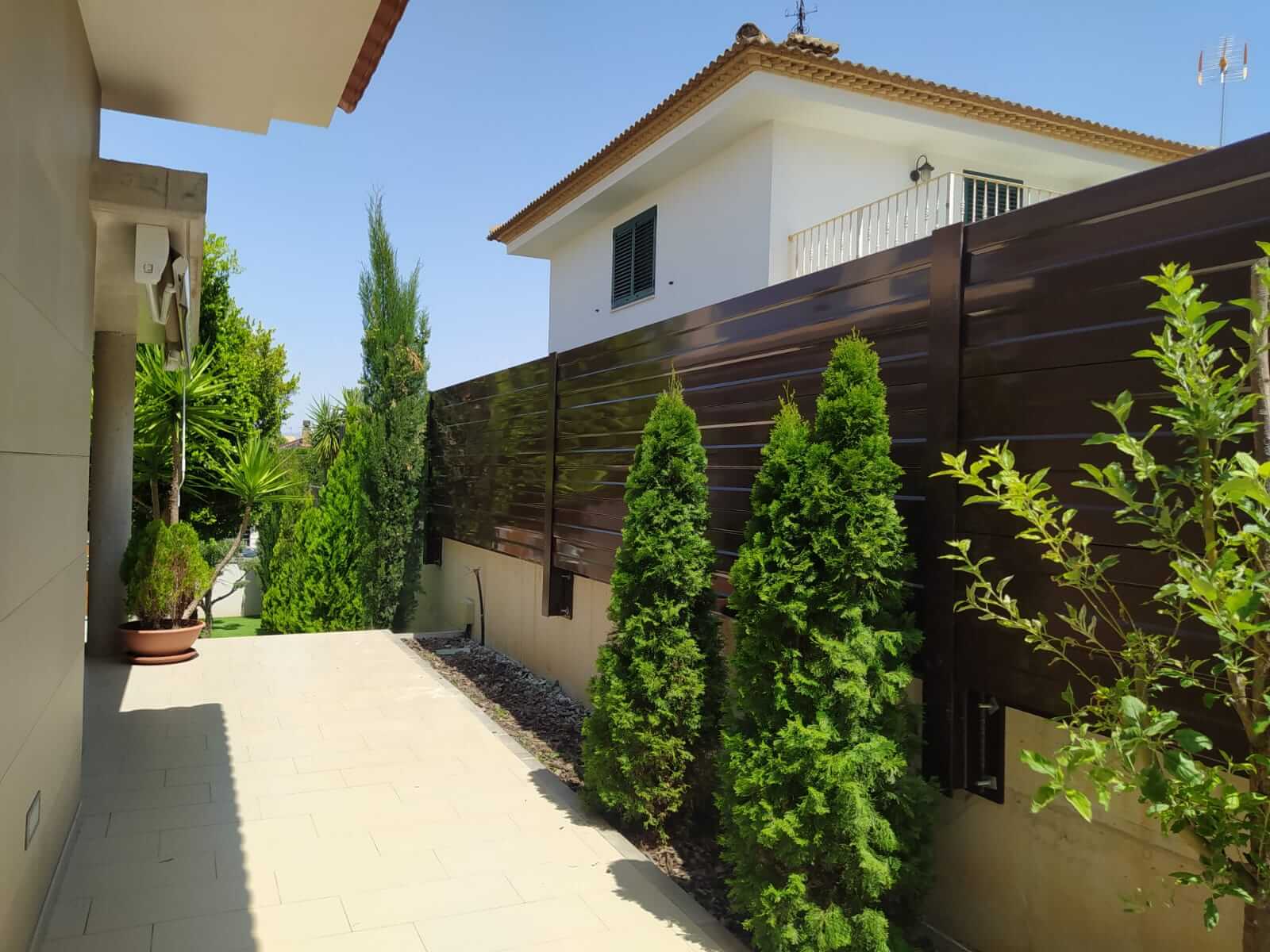
Noise protection in private areas
Does the noise of your neighbors or the noise of the cars passing by your street annoy you? Is there a leisure area or an industry near your home? Your home should be a place of peace and tranquility, but not rarely there are annoying noises that deprive us of it, especially in villas or urbanizations. Our concern to improve people's quality of life has led us to develop a range of acoustic screens with the goal of making life more comfortable.
Acoustic Insulation for chalets
We use acoustic screens/barriers for villas and urbanizations in order to attenuate the noise that comes from outside. To install them, we take into account the following factors:
Acoustic Barrier height
Acoustic screen/barrier for chalets are usually over two meters high because the screen must be higher than the source that produces the noise, be it cars or the bustle of people in your residential area. In any case, the optimal solution will be defined after carrying out an acoustic study that identifies its intensity by zones with a noise map. As a secondary aspect, the higher, the greater visual screen to guarantee privacy.
Composition of the acoustic screen
At Metalesa we design, manufacture and install different types of acoustic screens/barriers for chalets made of different materials. All of them serve to attenuate noise, but it is true that, depending on the situation, the environment, the architecture of the house or other factors, some will be more suitable than others. Later we will show you the types of acoustic screens for chalets that we manufacture in Metalesa, with special emphasis on Metagreen acoustic screens, also known as vegetal panels.
Ease to install
Acoustic screens for chalets or single-family homes should be located as close as possible to the source of the noise so that they can block out sound waves. We have different compositions in our catalog, but in general, they all contain a sound-absorbing material inside that captures the sound waves and makes them bounce inside until they disappear.
Our screens have a modular design that makes them very easy to place, even by the customer himself. Our offer includes assembly if the client so requests, but the client could carry out the installation himself.
Metagreen Acoustic Barrier: a great option
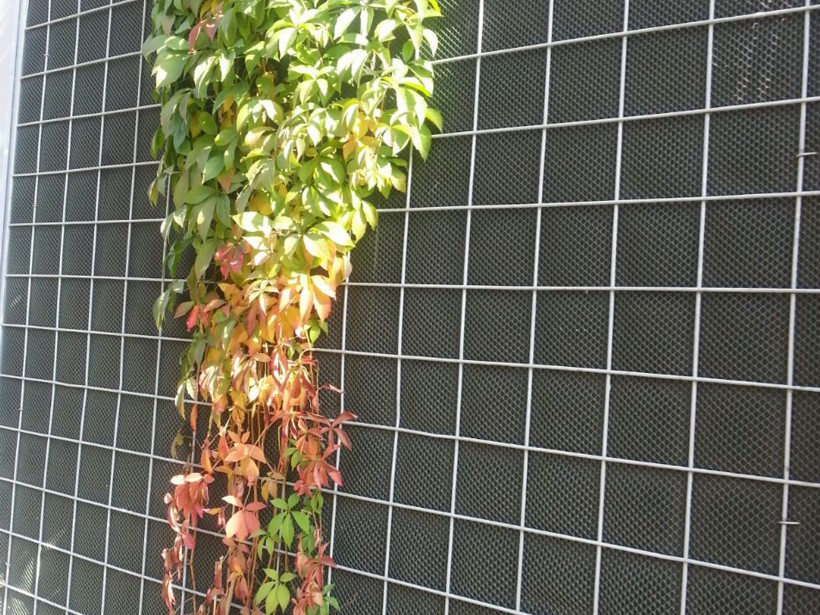
Metagreen acoustic screens for chalets, or green panels, are metallic anti-noise screens that are perfect to be placed in this type of residential area, performing a double acoustic and aesthetic function, thanks to their green appearance that adapts to all types of homes.
The interior of the Metagreen acoustic panel is identical to other models of screens, with rock wool inside to absorb noise. But on the side facing the house, a green plastic mesh is placed facilitating the growth of vegetation and making a more nature-like environment. This solution can also be implemented on the exterior face facing the street. Without a doubt, it is one of the best options when it comes to reducing noise in urbanizations.
From a regulatory point of view, like all the products manufactured and marketed by Metalesa, acoustic panels for chalets are tested based on current regulations. In this case, they have been acoustically tested according to the UNE EN 1793 standard and mechanically according to the EN 1794 standard. The latter guarantees that the noise reducing elements withstand wind loads in a robust way.
The Metagreen panel has numerous advantages, which we can specify in the following:
- Ecological and natural appearance.
- Excellent insulating and absorbent acoustic effect.
- Presents a long durability when going through an anticorrosion galvanized treatment.
- Panels made with recyclable and sustainable materials
- Ease of installation as it is a panel only 0.5 cm wide, which facilitates its handling. It is a lightweight construction that provides great acoustic insulation.
Other Acoustic barriers/ screens
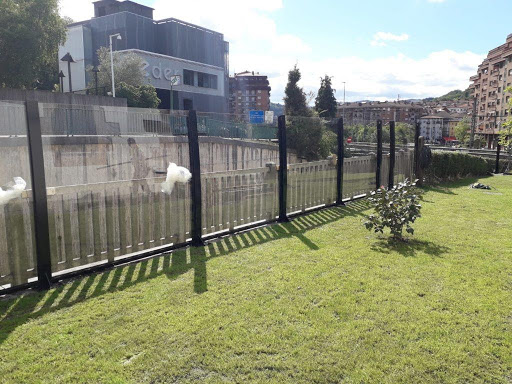
Methacrylate acoustic screen for chalets
This type of insulating panel is made up of a polymethacrylate sheet with a thickness of 15 or 22 millimeters, and a bearing structure made up of HEA / HEB posts with a welded base plate, hot-dip galvanized, and painted with polyester powder paint.
They can be transparent or colored, your choice will depend on what best suits the style of your home. In addition, they are also easy to install, have long durability and provide optimal insulation.
Wooden acoustic screen for chalets
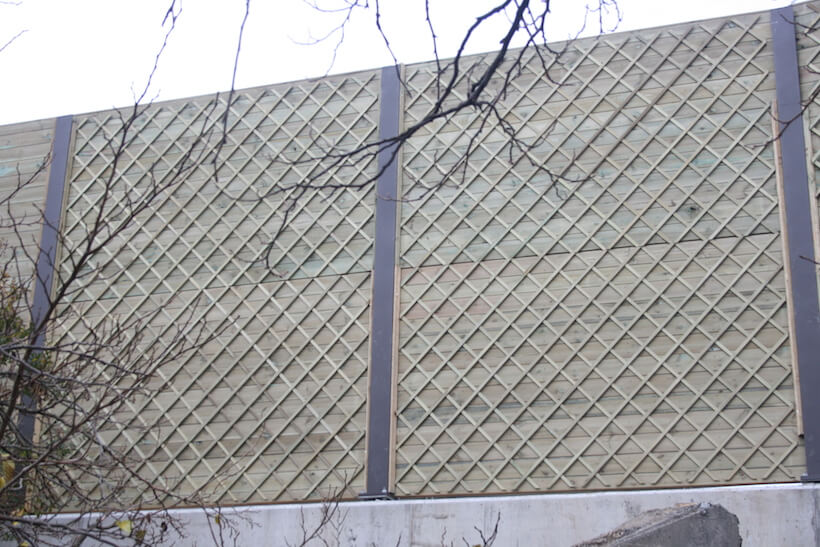
Like the Metagreen screen, the wooden acoustic barrier also provides a touch of 'nature', in addition, there is the possibility of making different combinations with vertical and horizontal boards, achieving different aesthetic effects.
The acoustic insulation is achieved thanks to the rock wool incorporated inside, with a black veil covering that protects the rock wool from inclement weather.
Design Acoustic Screen for chalets
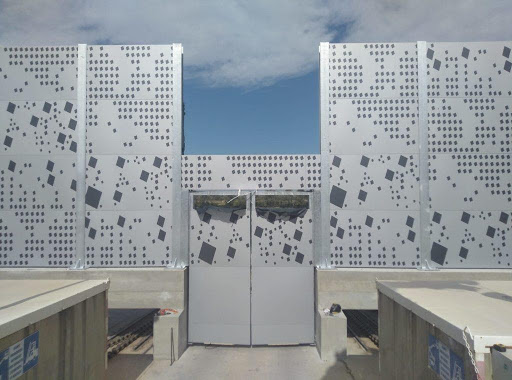
Functionality does not have to be at odds with aesthetics, and the design acoustic barrier for chalets is proof of this. We design screens according to the needs of our clients and what we see the market demand, so that there are multiple possibilities.
Without a doubt, installing an acoustic screen in your chalet is a totally wise decision if what you are looking for is to isolate yourself from noise. On the one hand, you will be able to enjoy being calm in your house, oblivious to what happens outside and, on the other hand, you will achieve aesthetics and privacy. Also, if you decide to install the Metagreen acoustic screen, you will soon have a garden surrounded by greenery! An ideal home free from annoying noise.
To ask us for a quote or more information, do not hesitate to contact us. Call us at 96 088 99 44, or write to us at metalesa@metalesa.com.