The growth of transport networks and the expansion of access routes integrated into populated areas have made traffic noise one of the main challenges in urban and suburban environmental management. Traditionally, the response of acoustic engineering has been clear: the installation of physical barriers to protect the population.

However, in the current context of public resource optimisation and the transition towards the Smart City, the decision by public authorities and construction companies to purchase noise barriers can no longer be based solely on the initial cost per square metre. The true indicator of success lies in life-cycle cost efficiency (LCC) and the infrastructure’s ability to integrate into an intelligent management model.

1. The true cost of noise: Beyond the initial installation

When public authorities plan urban and road noise control, they must comply with strict noise regulations, such as the European Environmental Noise Directive. Meeting the permitted decibel levels is mandatory, but how those levels are achieved determines the long-term financial sustainability of the infrastructure.

The most common mistake in the procurement of noise barriers is to overlook deferred operating costs. A low-cost noise barrier that is prone to degradation caused by weather conditions, corrosion or material fatigue can quickly become a drain on public resources. A genuinely efficient solution is one designed according to the principle of low maintenance, ensuring that its sound insulation and absorption properties remain unchanged for decades.

2. Life cycle and resilience

To balance the requirements of high-speed motorways with the aesthetic and logistical demands of urban environments, materials engineering offers a range of solutions:

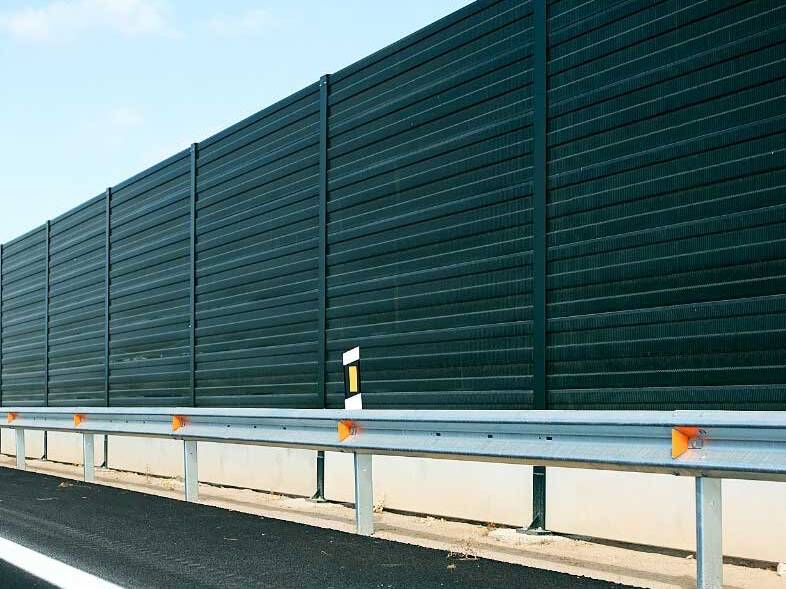
  • Steel and aluminium: Highly industrialised noise barriers whose low weight reduces transport and installation costs. Their mechanical strength makes them ideal for withstanding wind loads on motorways.
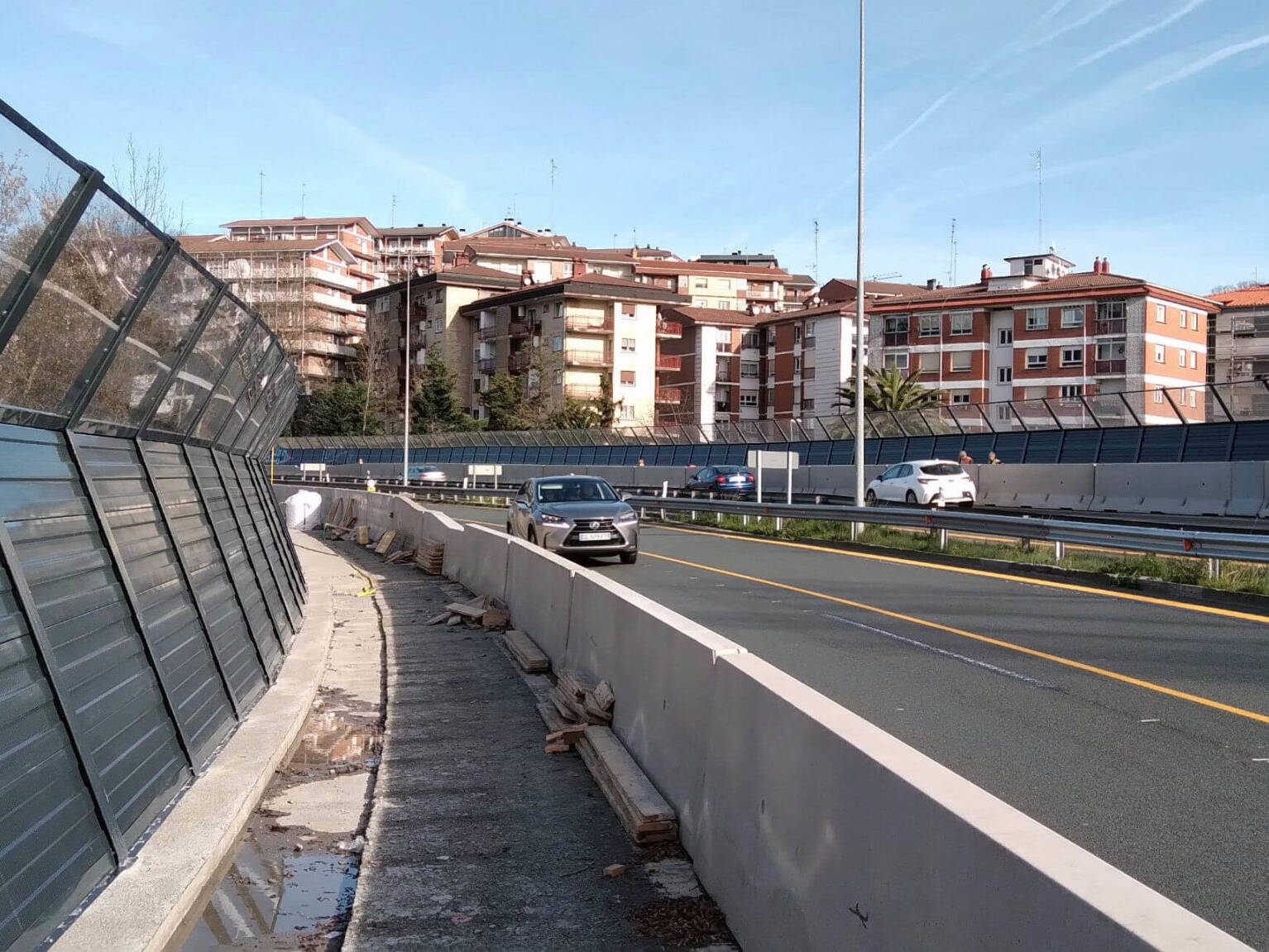
  • Methacrylate (PMMA): Essential for maintaining visual permeability and natural light both on road viaducts and in areas integrated into the city, avoiding the “trench effect”.
  • Modular and foundation-free solutions: For environments that require flexibility, such as long-term roadworks or urban reconfiguration projects, temporary noise barriers provide immediate protection with minimal deployment and removal costs, maximising the material’s contribution to the circular economy.

The key to efficiency is not the material itself, but its treatment, such as hot-dip galvanising or powder coating, to ensure that the asset does not require structural intervention over a period of 20 to 30 years.

3. Noise barriers 4.0: Convergence with the Smart City and ITS systems

The major qualitative leap —and the feature that justifies investment in cutting-edge projects— occurs when noise barriers are equipped with digital capabilities. Just as other road equipment is evolving towards connectivity, noise barriers can be integrated into the IoT ecosystem to provide valuable data that improves quality of life in the Smart City.

How does technology translate into greater efficiency for this type of infrastructure?

3.1. Sensors for dynamic noise mapping

Traditional acoustic engineering carries out occasional measurements using handheld sound level meters. Today, the international trend is moving towards the use of Wireless Acoustic Sensor Networks (WASNs). By integrating IoT microsensors —similar to the technologies deployed by companies such as Bettair Cities or engineering corporations such as Wölfel Group in urban environments and mobility projects— into the noise barriers themselves, they cease to be passive elements.

This makes it possible to monitor sound pressure levels continuously and automatically. The resulting data feeds into central Smart City platforms, allowing municipal technicians to accurately correlate traffic flow with its real acoustic impact and make informed urban planning decisions.

3.2. Structural monitoring and predictive maintenance (SHM)

By using Structural Health Monitoring technologies, commonly known as SHM and widely validated in the wind energy sector and on major bridges, it is possible to assess the condition of the infrastructure remotely. Tilt sensors, spectrum accelerometers and connected nodes can automatically detect:

  • Structural deviations caused by wind or settlement: Alerts can be issued when a noise barrier undergoes hazardous deformation due to extreme wind gusts, turbulence caused by heavy vehicles or unforeseen problems with the ground foundations.
  • Loss of sound insulation caused by misalignment: Micro-accelerometers can identify whether a section of the noise barrier is experiencing abnormal vibrations or has become detached from the supporting posts, breaking the acoustic continuity of the barrier.

By receiving these alerts in real time, road maintenance teams can implement predictive maintenance, attending the exact location only when necessary and significantly reducing the cost of visual roadside inspections.

In conclusion, investing in efficient noise barriers is not simply expenditure on containment; it is a value-creation strategy for regional development. Mitigating road traffic noise and controlling urban noise through durable, intelligent systems protects public health, increases the value of urban land and optimises public maintenance budgets.

The infrastructure of the future must be durable in its physical composition and open in its digital architecture. Only by combining the strength of traditional engineering with the potential of data collection can roads and urban environments be prepared for the challenges of the coming decades.