




Road safety barriers, technically called vehicle restraint systems (VRS), are an essential element of modern infrastructure, designed to protect drivers, pedestrians, and cyclists from traffic accidents. Their main function is to reduce the severity of collisions, preventing vehicles from leaving the road or impacting dangerous elements. In Spain and throughout Europe, the assemble of barriers is regulated by strict standards that guarantee their effectiveness and certification, which are key factors for public works projects.
The choice of the right barrier depends on key factors such as road type, traffic volume, the context (urban, interurban, tunnels, bridges), and the containment level required by regulations. The main categories are described below:
Table of Contents
ToggleMetallic Barriers (Guardrail)
Metallic barriers, also known as guardrails, are usually made of galvanised steel, offering excellent corrosion resistance and extended durability. These flexible systems are engineered to deform on impact, absorbing and dissipating energy to lessen crash forces and reduce the risk of injury to vehicle occupants.
These systems are ideal for standard roads and motorways, especially in sections where a vehicle could leave the roadway towards slopes, embankments, or wooded areas. Their main benefits are their reduced cost, ease of installation and repair, and great versatility. However, a clear safety zone must be maintained behind the barrier to accommodate its deformation (working width).
Concrete Barriers
These barriers are built with reinforced or pre-stressed concrete, and often feature tongue-and-groove joints to improve their continuity. They are rigid systems that barely deform upon impact, as their main function is to contain and redirect the vehicle back onto the carriageway.
They are used on motorways and high-capacity roads, as well as on bridges, viaducts, and in tunnels, where there is no lateral margin for deformation. Their main advantages are their very high durability and the minimal repair needs after an impact. Their main limitation is that they transmit a higher impact severity to vehicle occupants compared to flexible barriers.
Mixed Barriers
Mixed barriers combine a concrete base with metal elements on the top. Their design seeks a balance between rigidity and flexibility, absorbing impact energy to reduce its severity for occupants without losing structural stability.
They are common in urban areas with mixed traffic (heavy and light vehicles) and on high-speed roads near urban centres, but they are falling into disuse because they are not certified systems according to current regulations since 2011. At the time, they addressed some of the shortcomings of concrete barriers, such as their height.
Motorcyclist Protection Systems
The design of conventional barriers, particularly the vertical posts that support them, creates a serious risk to motorcyclists. In a fall, the direct impact of the rider’s body or motorcycle against these rigid elements can cause severe or fatal injuries. To mitigate this danger, motorcyclist protection systems (MPS) have been developed: a continuous lower panel installed beneath the guardrail to shield the posts and reduce under-ride and snagging.
These MPS, made from steel, high-resistance polymers or a steel-polymer hybrid, create a smooth and continuous surface that prevents riders from sliding under the barrier and colliding with the posts. In effect, they guide the rider along the barrier, reducing exposure to the most hazardous impact points. They are a priority safety measure on sections with high motorcycle crash rates, dangerous curves, and mountain roads, where the risk of falling is higher. Multiple studies report meaningful reductions in both the frequency and severity of motorcyclist injuries.
Guardrails and Pedestrian Systems
These systems are designed to protect the most vulnerable users—pedestrians and cyclists—and to guide traffic in urban settings. They are made of materials such as steel, aluminium, or methacrylate, and always comply with accessibility requirements and a minimum protection height.
They are installed on pavements alongside heavy traffic roads, on elevated pedestrian crossings, and in urban areas with high pedestrian volumes. Their main advantage is increased road safety for vulnerable users and better organisation of pedestrian flow.
Reference Standards
In the European Union, the EN 1317 standard is the key reference standard governing the characteristics, performance requirements, and tests methods for road safety barriers. It ensures consistent safety criteria across Member Countries, making validation and comparison easier throughout the European market.
The key parameters defined by the standard are:
- Containment level: indicates the barrier’s ability to stop vehicles of different masses, at different speeds and impact angles. For example, an H2 level is capable of stopping a 13-tonne bus, while an N2 level applies to 1.5-tonne cars at intermediate speeds. Each country has mechanisms for selecting the containment level for each type of road and its AADT (Average Annual Daily Traffic) and vehicle type.
- Dynamic deflection (D): defines the maximum distance that the front face of the barrier displaces upon impact.
- Working width (W): defines the maximum distance the barrier displaces backwards during an impact. This is crucial to ensure that the vehicle does not hit obstacles, structures, or pedestrians behind the restraint system.
- Vehicle intrusion (Vi): defines where a hypothetical 4-metre truck box would end up after impacting the barrier. This is especially important in structures where this box could hit structural elements, for example, on a cable-stayed bridge.
- Impact severity (A,B,C): assesses occupant protection, measuring the forces acting on the occupant during the collision. A classification A represents the safest level, as it minimises physical damage to passengers.
Passing the EN 1317 tests enables CE marking—mandatory since 2011—for the marketing and installation of road safety barriers on public works. This certification not only confirms compliance with the European test regime, but also supports acceptance by public authorities in tendering and infrastructure approval processes.
Impact Testing and Technical Validation
Before deployment, barriers must undergo full-scale crash tests at accredited laboratories. These tests reproduce controlled crash conditions using vehicles of specified masses, dimensions and speeds, as required by EN 1317.
During the tests, three main aspects are evaluated:
- Containment and redirection capability: the barrier must prevent vehicle penetration or rollover and then redirect the vehicle back towards the carriageway in a controlled manner to minimise secondary risks.
- Dynamic deformation and energy absorption: Measures the barrier’s displacement/deformation and the energy absorbed on impact—critical for defining the safety space (working width) behind the installation.
- Occupant safety and structural integrity: Assesses in-vehicle acceleration/deceleration and the post-impact stability of the barrier. A certified system must protect in the initial crash and retain adequate performance for subsequent impacts until repaired.
Crash test reports are essential for obtaining CE marking and, consequently, for supplying barriers to public projects.
Certification as a Requirement in Public Projects
In public procurement, EN 1317-certified barriers are not optional but a mandatory requirement.
Beyond compliance, certification adds value for companies in the sector, instilling confidence in both public authorities and road users. It also safeguards competitiveness in an increasingly regulated and demanding market.
However, the CE marking granted by this standard is not the only valid tool for evaluating vehicle restraint systems; in fact, it’s not uncommon for uncertified systems to be installed, such as transitions between VRS or barrier terminals. EN 1317 is, above all, a framework to harmonise evaluation across Europe, a considerable challenge, and authorities have not always issued standards covering every type of restraint system. This doesn’t mean these solutions aren’t rigorously assessed; they may be installed when they’re the best fit for the site or when no suitable CE-marked option is available.
Road safety barriers are not merely equipment; they are a strategic element in reducing crashes and protecting lives. Proper selection, installation and certification ensure not only regulatory compliance but also the feasibility of public and private projects. Choosing certified systems is an investment in safety, sustainability and trust.

Civil Engineer with over 10 years of experience in transport and mobility infrastructure. Specialist in structural calculations and vehicle restraint systems (EN 1317), with a solid track record in civil engineering projects for international construction companies. Committed to road safety, innovation, and knowledge transfer through training, research, and participation in technical standards development.
Related articles
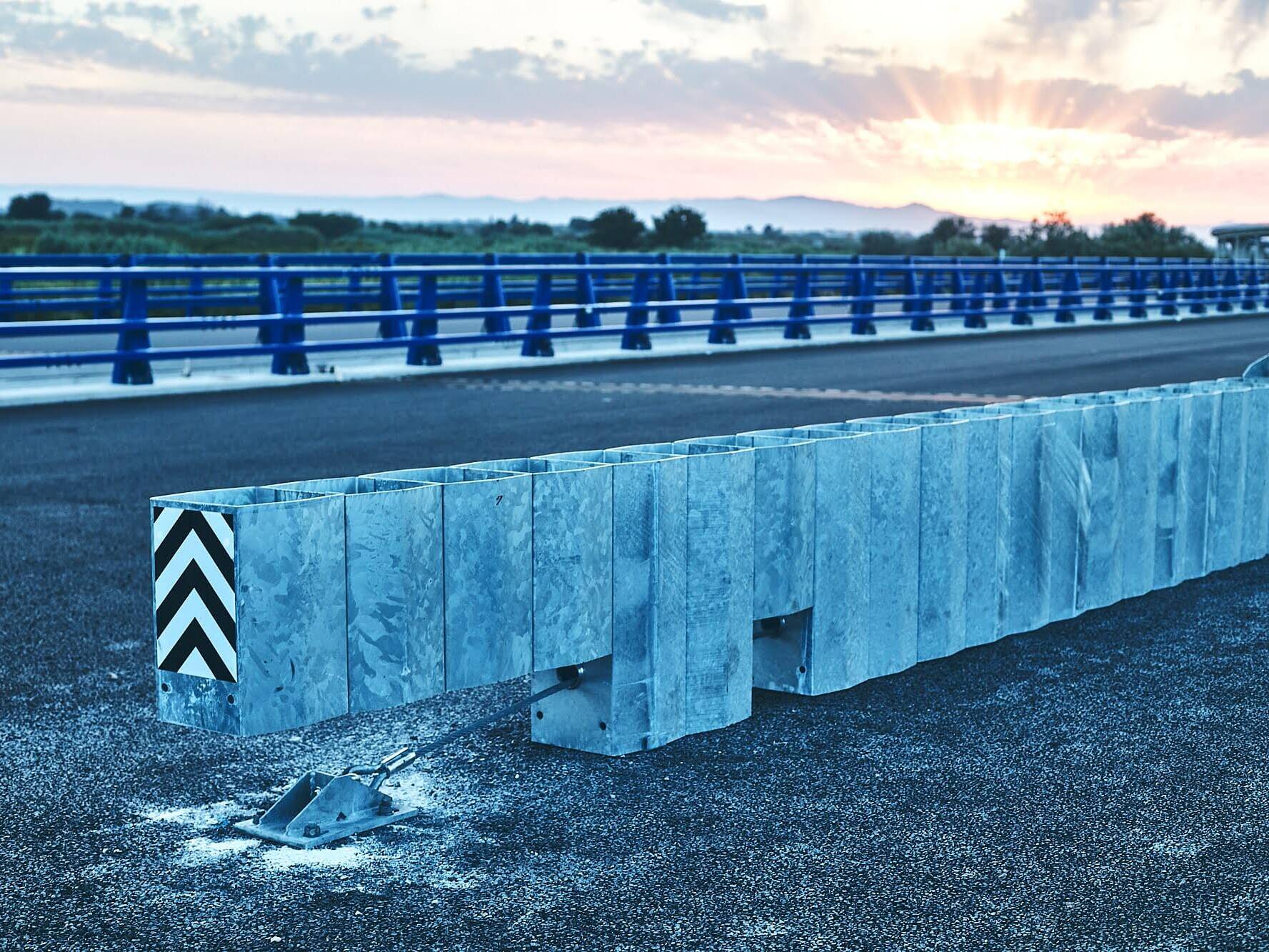
Connected Crash Cushions: The next step towards the Smart Road
The evolution towards connected mobility is transforming the landscape of our roads. Passive safety elements, traditionally static, are giving way to…
Fall protection: Road and urban railing, fencing and enclosures for height safety in public spaces
When we talk about infrastructure safety, the focus is often exclusively on the road. However, pedestrian safety in public spaces, stadiums,…

The data generated by the road: Intelligence applied to road safety and maintenance
The road is no longer a passive and static infrastructure but has become a dynamic, information-generating environment. In the era of connected…
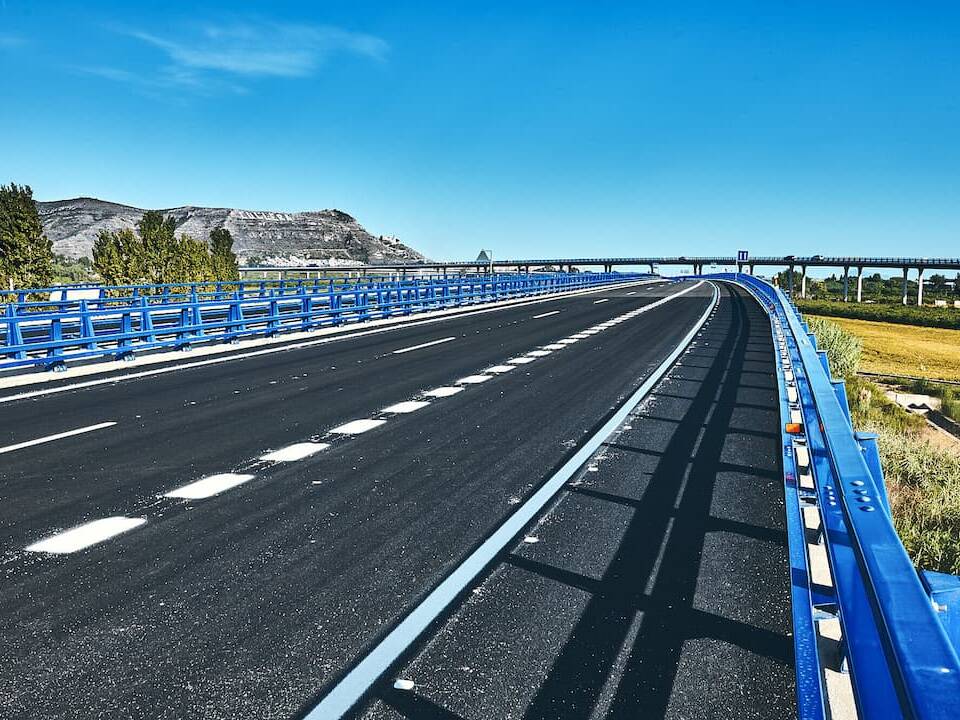
The Importance of Preventive Maintenance in Road Safety: Prolonging the lifespan of infrastructures
Transport infrastructure management has undergone a paradigm shift over the last decade. Faced with the need to optimise public budgets and guarantee…