When we talk about infrastructure safety, the focus is often exclusively on the road. However, pedestrian safety in public spaces, stadiums, transport stations, and industrial zones represents an equally critical challenge. In this context, passive fall protection stands as the first and most effective line of defence to guarantee the physical integrity of individuals.

Unlike active protection (such as harnesses or lifelines, which require training and action from the user), passive systems protect permanently and autonomously, eliminating the human error factor. This article analyses why safety railings and technical enclosures are a mandatory investment—not only ethically but regulatorily.

The Magnitude of the Risk: Data and Statistics

Falls from height are not isolated incidents. According to World Health Organization (WHO) data, falls are the second leading cause of accidental injury deaths worldwide.

In the field of infrastructure and public assembly spaces, statistics reinforce the need for robust systems:

  • The Human Factor: It is estimated that 85-90% of accidents at height are influenced by human error or distraction. This is the core advantage of passive fall protection: it works independently of the user’s attention.

  • Accident Costs: A report by the European Agency for Safety and Health at Work indicates that costs resulting from accidents due to a lack of safety measures can amount to 4% of annual GDP in economic losses, including sick leave, compensation, and healthcare costs.

Regulatory framework: Space safety regulations and thrust loads

The installation of safety railings in public spaces is not an aesthetic matter, but one of regulated structural engineering. In many regions, rigorous requirements are established for public assembly spaces like sports stadiums, concerts, or train stations; railings must withstand much higher horizontal loads than in residential settings:

  • Crowded Areas: Regulations often require railings in stadiums or high-traffic areas to resist a horizontal force of 3.0 kN/m (kiloNewtons per metre).

  • Anti-climb Design: Regulations explicitly prohibit designs with horizontal rails that allow climbing in areas frequented by children, requiring the use of vertical bars or solid panels.

Technical solutions: Road and urban railing and road and urban fences

To mitigate these risks, solutions must adapt to the specific environment:

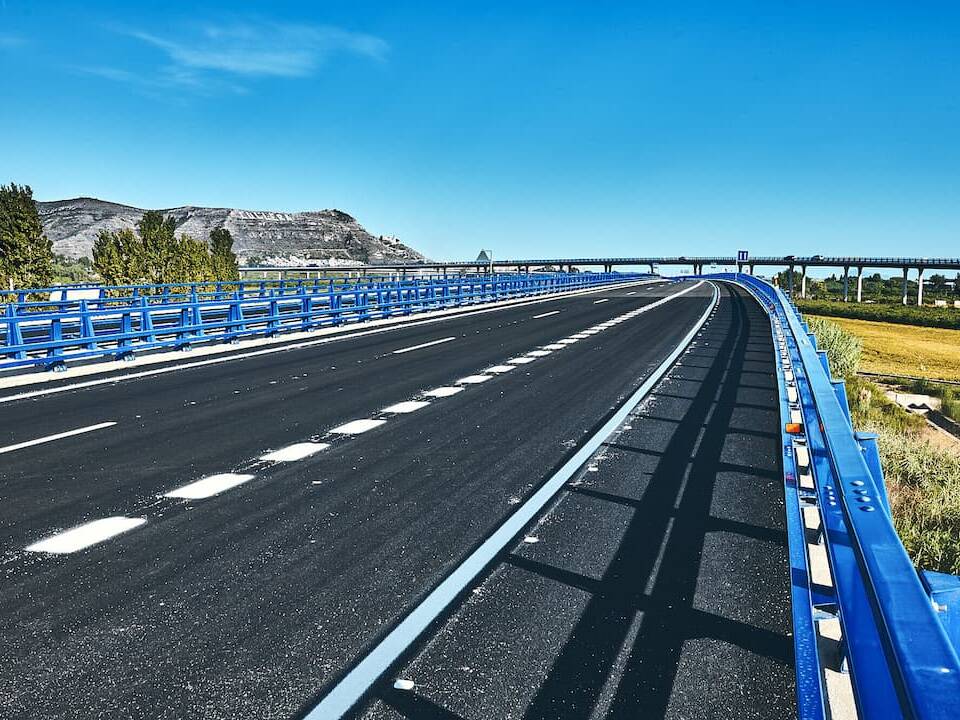
  • Road and Urban Railing (for Viaducts and Urban Use):

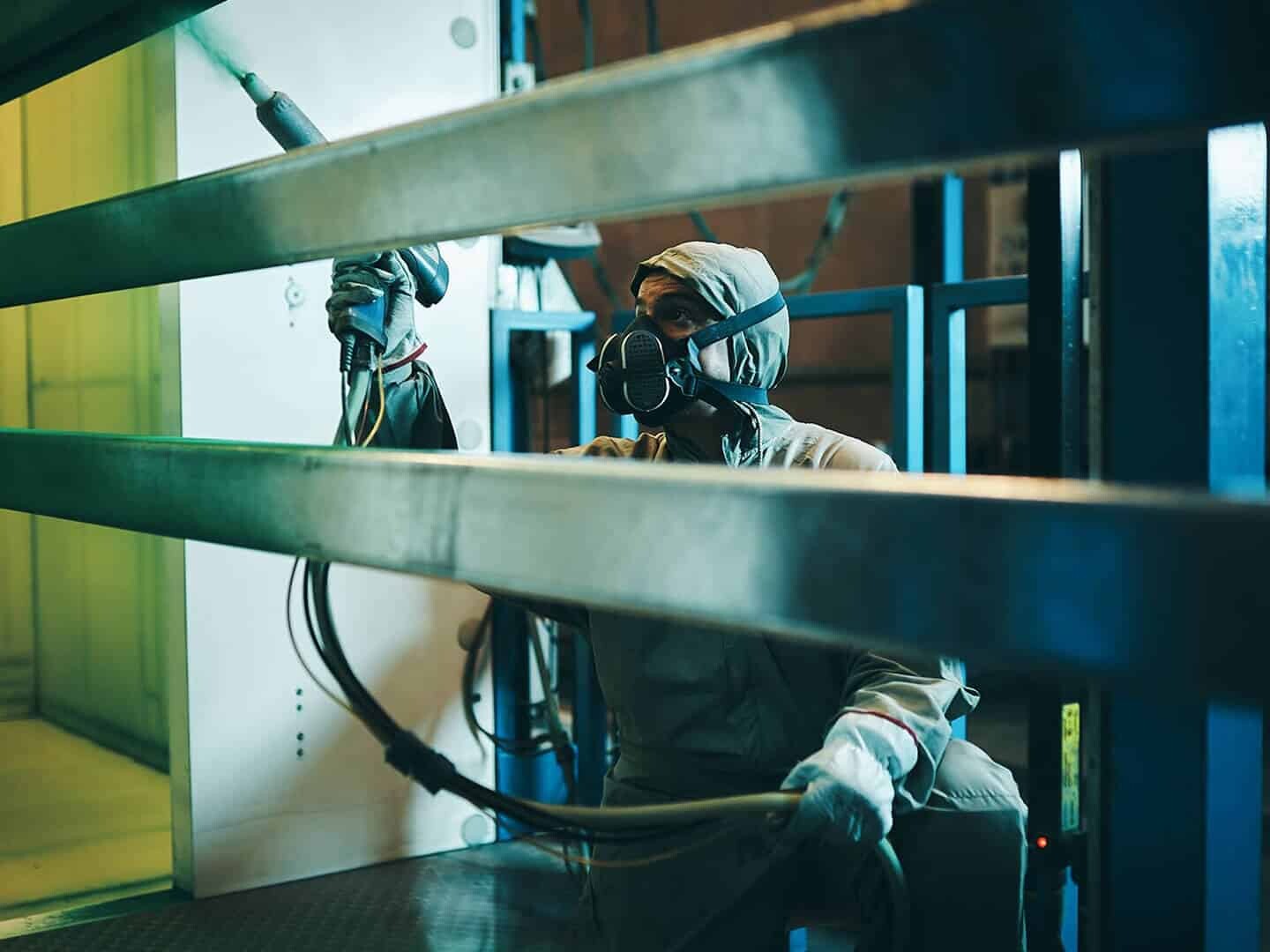
    These are critical elements on pedestrian bridges, promenades, or urban gradients. They must combine extreme mechanical resistance with high-durability anti-corrosion treatments (such as hot-dip galvanising according to ISO 1461). Their function is twofold: to prevent accidental pedestrian falls and, in many cases, to contain the impact of cyclists or Personal Mobility Vehicles (PMVs).

  • Road and Urban Fences (Perimeter Safety):

    Beyond falls, the risk in railway or industrial infrastructure is intrusion. Perimeter fences act as both a deterrent and a physical barrier. In Occupational Risk Prevention (ORP) environments, these systems are vital for segregating safe walkways from areas with moving machinery or electrical risks. Within this category, anti-suicide fences are particularly relevant, specifically designed to prevent scaling at critical high points.

An Integral approach to safety

The implementation of collective protection systems offers a direct return. Comparatively, although the initial investment in passive systems (fixed railings) may be higher than temporary solutions, their operating cost is near zero throughout their useful life.

Furthermore, in the field of infrastructure maintenance, these elements are key to Occupational Health and Safety (OHS). They ensure that cleaning, lighting maintenance, or gardening staff can carry out their tasks in elevated environments (such as technical roofs or embankments) without the need for complex Personal Protective Equipment (PPE), thereby speeding up work times and reducing workplace accidents.

Safety at height in public spaces leaves no room for improvisation. Passive fall protection through certified safety railings and robust perimeter fences is the only guarantee of regulatory compliance and real public protection. For architects, construction companies, and administrations, having manufacturers who understand the engineering behind every tube and anchor is the first step toward building safe and responsible urban environments.