




Transport infrastructure management has undergone a paradigm shift over the last decade. Faced with the need to optimise public budgets and guarantee high protection standards, preventive road maintenance is no longer an option but has become the most efficient strategy.
This methodology does not view conservation as an operating expense, but as a financial investment that maximises the return on the initial construction. The data is conclusive: waiting for the functional failure of the road is neither economically nor socially sustainable.
Table of Contents
ToggleEconomic efficiency: The 1:5 Rule
The strongest argument for public institutions is profitability. In infrastructure engineering, the so-called “Law of De Sitter” applies, which establishes a geometric progression in intervention costs.
According to this principle, every euro not invested in preventive maintenance (when the defect is incipient) turns into 5 euros of expenditure when the damage requires minor correction, and skyrockets to 25 euros when full rehabilitation is necessary. Applying preventive strategies—such as checking the tightening torque on barriers or the early sealing of cracks—allows this escalation of costs to be avoided, freeing up resources that would otherwise be absorbed by emergency repairs.
Operational impact: Cost reduction for the user
The condition of the road has a direct impact on citizens’ pockets and the competitiveness of businesses. According to the latest Audit by the Spanish Road Association (AEC 2025), the maintenance deficit (estimated at over 13.4 billion euros) generates tangible inefficiencies:
- Additional fuel costs: A poorly maintained pavement and infrastructure increase rolling resistance, raising fuel consumption by up to 12%. It is estimated that this factor generates an annual extra cost of over 270 million euros in the months of highest mobility alone.
- Carbon Footprint: This increase in consumption implies a proportional increase in emissions. Sector studies calculate that poor maintenance has caused the extra emission of more than 25 million tonnes of CO2 over the last decade.
Road maintenance and containment systems
Within road equipment, containment systems (metal barriers and parapets) are critical elements whose degradation can be “silent”. Unlike a pothole, which is obvious, a barrier with internal corrosion or weakened anchorages may appear functional until it fails upon impact.
Proper preventive road maintenance of these elements includes verifying the tension of the beams, the condition of the spacers, and the integrity of the galvanisation. Bearing in mind that network deterioration advances at a rate of 8% annually, implementing periodic inspection programmes is the only way to ensure that these systems comply with the containment levels (N2, H1, etc.) certified under the UNE EN 1317 standard throughout their useful life.
The key to infrastructure durability
The sustainability of public works depends on how long they can operate without being rebuilt. International studies (Kahn & Levinson) suggest that every dollar allocated to prevention saves between 4 and 10 dollars in future reconstruction costs.
In the case of metallic safety elements, preventive maintenance acts directly on the product’s life cycle. Detecting and treating areas of premature oxidation in saline environments or repairing minor deformations prevents the complete replacement of barrier sections, drastically reducing raw material consumption and the energy associated with manufacturing new steel.
The role of advanced technical inspection
To execute this strategy, the fundamental tool is data-driven road inspection. With 52% of the Spanish network showing significant deterioration, the use of high-performance technologies allows the condition of thousands of kilometres to be audited in reduced times.
However, inspection is only the first step. The true value lies in how that information is integrated into an intelligent management cycle.
Technology: The engine of planning and control
Today, the modernisation of road maintenance necessarily requires digitalisation. Technology is not an accessory, but the axis that allows us to plan, execute, and control the condition of our roads with surgical precision:
- Digital Twins: Creating virtual replicas of the infrastructure makes it possible to simulate the ageing of materials and predict when a containment system will fail before it happens, optimising replacement cycles.
- Computer Vision and AI: Using high-resolution cameras combined with deep learning algorithms automatically identifies cracks, oxidation, or loose bolting through image processing, eliminating human error in inspections.
- IoT and Structural Monitoring: Connected sensors on critical bridges and barriers report impacts, anomalous vibrations, or structural tensions in real-time, allowing for an immediate response and comprehensive inventory control.
- Cloud Management Platforms: Centralising data gives public administrations total control over maintenance contracts, verifying that preventive tasks are carried out on time and as planned.
Opting for preventive road maintenance is a strategic decision that benefits both the manager and the user. Nevertheless, in the current scenario, this model is only viable through the adoption of cutting-edge technological solutions. The combination of accurate data and intelligent management tools is the only way to maximise public budgets, prolong the lifespan of infrastructures, and, above all, guarantee that the road is always a safe and efficient environment.

Engineer with a strong technical background and experience in the development, management, and supervision of engineering projects, with a focus on regulatory compliance and technical feasibility. Skilled in interpreting and applying current technical and regulatory standards, preparing and reviewing technical documentation, and coordinating projects from the design phase through implementation. Possesses expertise in technical analysis, ensuring efficient, safe solutions aligned with industry standards.
Related articles
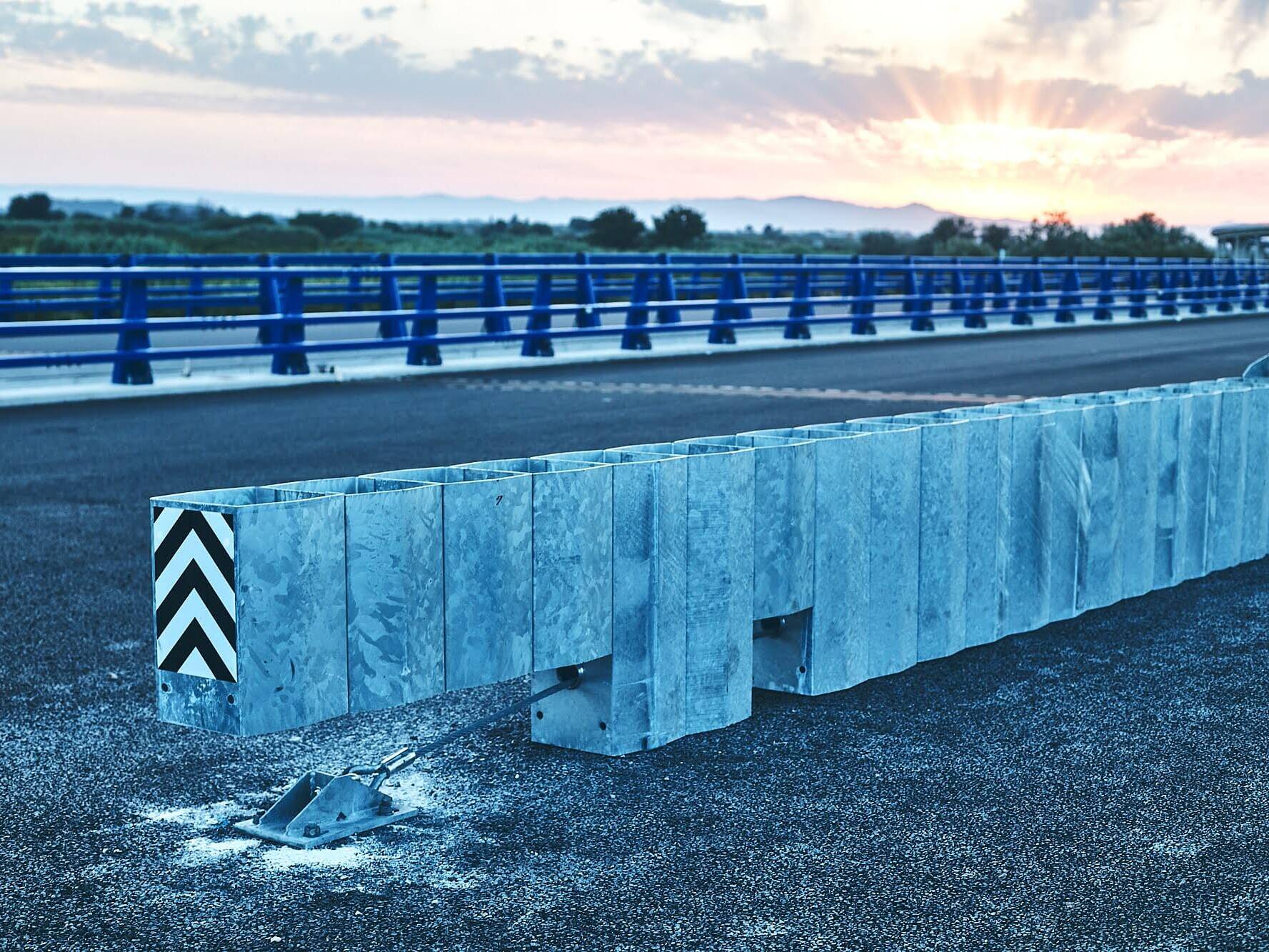
Connected Crash Cushions: The next step towards the Smart Road
The evolution towards connected mobility is transforming the landscape of our roads. Passive safety elements, traditionally static, are giving way to…
Fall protection: Road and urban railing, fencing and enclosures for height safety in public spaces
When we talk about infrastructure safety, the focus is often exclusively on the road. However, pedestrian safety in public spaces, stadiums,…

The data generated by the road: Intelligence applied to road safety and maintenance
The road is no longer a passive and static infrastructure but has become a dynamic, information-generating environment. In the era of connected…
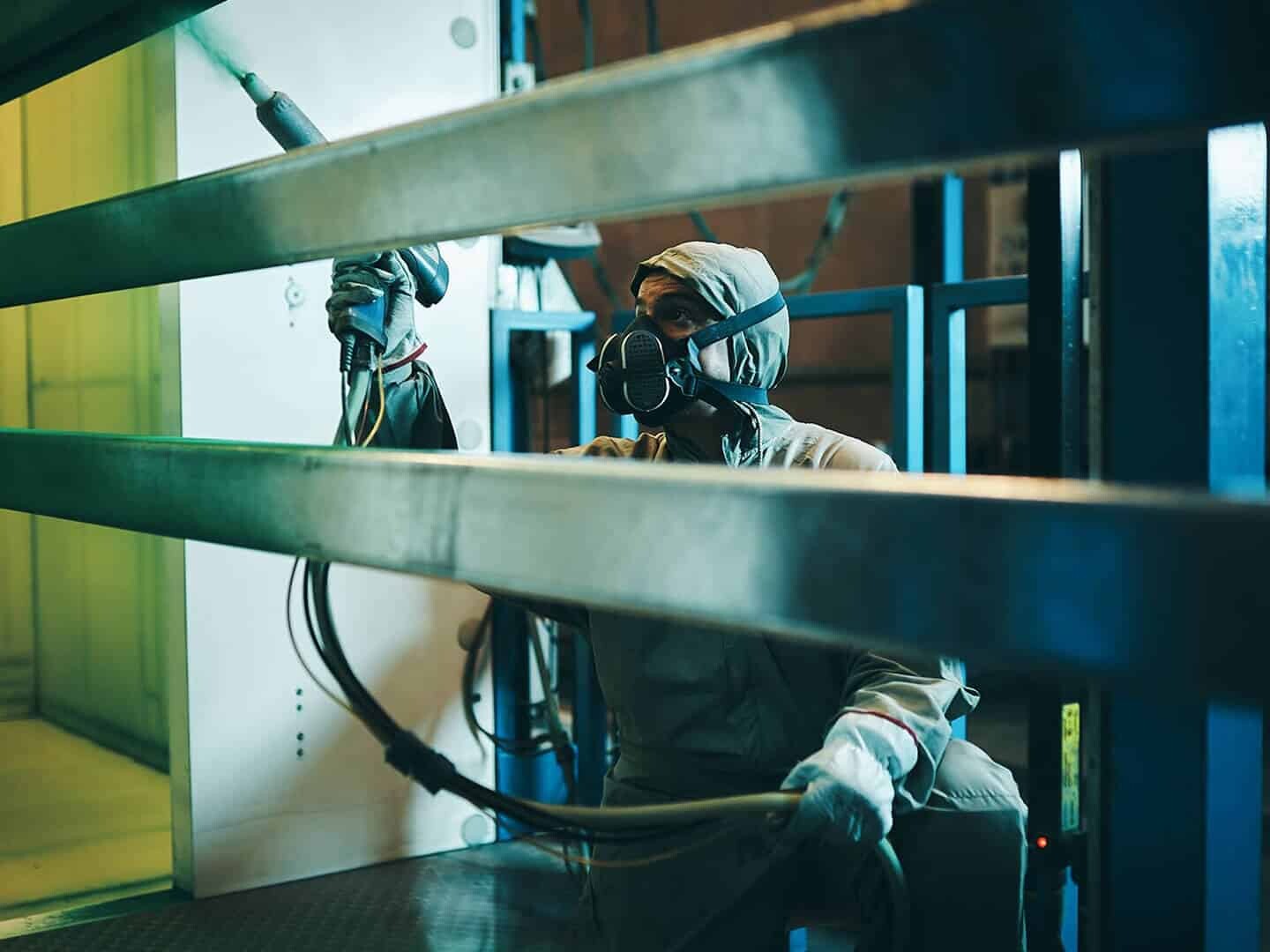
Hot-dip galvanizing: Durability of road safety equipment
Road safety depends on the structural integrity of its devices. From vehicle restraint systems (safety barriers, guardrails, impact attenuators,…